Renault will build just 1500 Rafale Hypnotic SUVs for Europe, with 200 allocated to Spain. Each will carry a numbered plaque, making the limited run a defining feature of this design-focused version.
The Hypnotic brings no new engine or extra speed. Renault has focused on rarity and design. The car uses the brand’s most advanced hybrid tech, but its limited production is what sets it apart. Each one has a numbered plaque, giving a regular production car a personal touch. For collectors and fans, knowing the exact number and which one they own adds appeal beyond any technical spec.
Italy will receive only 100 units, as part of the model’s distribution across 14 European markets. Independent European automotive media report that the Rafale Hypnotic will be officially presented at the Paris Motor Show in October 2026, with orders opening at the start of the month and first deliveries expected by year’s end. The price in France is 63,550 euros and in Italy 60,700 euros; Spain’s price will be announced on October 1.
Under the satin black paint, the Hypnotic sits on the Rafale E-Tech 4x4 300 CV atelier Alpine platform. Its plug-in hybrid setup pairs a combustion engine with three electric motors. The system puts out 300 CV and includes all-wheel lead. It also has four-wheel steering and a suspension system that uses a camera to read the road ahead. Renault says it can go up to 105 kilometers on electric power alone. Real-world use will likely be lower, but more than 100 kilometers of electric range changes how a plug-in hybrid fits into daily life, provided owners actually charge it.
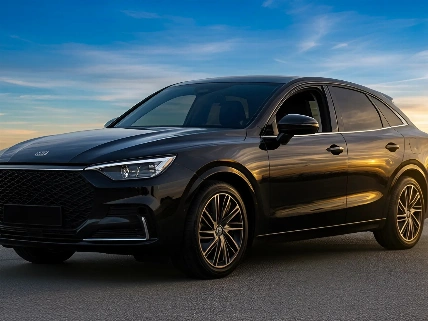
The outside is all about contrast. Satin jungle black paint and gloss black details on the roof and grille, which continue onto the rear spoiler, give the car a strong, dark look. The 21-inch wheels complete the effect. Renault kept things simple. Matte and gloss finishes give the Hypnotic its presence. The atelier Alpine badge is more subtle here, leaving the car’s shape to stand out.
Inside, the Hypnotic keeps the focus on quiet luxury. The seats use titanium black Alcantara and TEP fabric, with stitching in blue, white, and red. An illuminated Alpine “A” nods to the brand’s racing roots. Alcantara covers the dashboard, and each door has its own insert. The numbered plaque is the real hook. Knowing exactly where the car sits in the run gives a factory-built model a unique feel.
Renault hasn’t tried to squeeze out more horsepower or chase big acceleration numbers for this version. The Hypnotic uses the top setup already found in the Rafale range. The emphasis is on refinement and a complete package, not headline stats. Its hybrid system brings together a battery, fuel tank, power electronics, and several motors. That shows how far mainstream brands have come in putting advanced tech into everyday cars.
One of the most useful features is 4Control Advanced. At low speeds, it turns the rear wheels opposite the fronts, making parking and tight turns easier. At higher speeds, the rear wheels turn with the fronts to improve stability. Also used in the Austral, the tech is especially handy in big SUVs and makes city driving less of a hassle.
The adaptive suspension is another basic point. A camera spots bumps and changes in the road, then the system adjusts damping on the fly. Its performance in the Hypnotic is still an open question, but the setup shows how sensor tech has reached even non-premium cars. Cameras now help shape how a car feels on the road, beyond lane-keeping or spotting people.
The Hypnotic comes loaded. It has a Solarbay panoramic roof with adjustable tint, a heated windshield, a head-up display, and Harman Kardon audio. Buyers don’t have to wade through long option lists. The Hypnotic sits at the top of the Rafale line, with its full equipment list included as standard. Here, rarity comes from more than the paint or badge: buyers get everything as standard.
The atelier Alpine name means more than a badge. Alpine engineers have tuned the chassis, linking this big SUV to a brand known for light, sporty cars. This kind of prestige transfer is common in the car world, but with the Rafale, Renault is putting chassis engineering in the spotlight alongside space and screens.
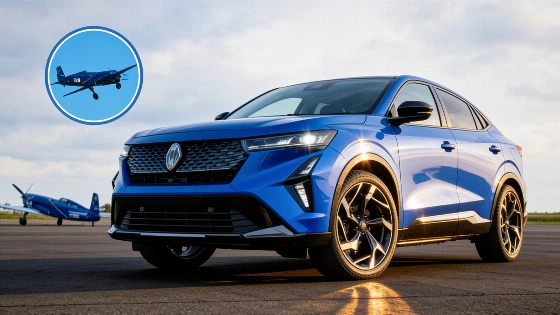
The Rafale name goes back to the 1930s, when Louis Renault worked with Caudron, the company behind the Caudron-Renault C.460 Rafale racing plane. Nearly 100 years later, Renault has brought the name back for its SUV coupé, drawing on a history of aerodynamics and French engineering rather than inventing a new identity.
The public debut is set for the Paris Motor Show in October 2026. Orders open on October 1, when prices for Spain will also be announced. With only 200 units coming to Spain, the Hypnotic will be a rare sight, and its price will likely reflect that scarcity.
Renault is following a playbook familiar to luxury and sports car brands: scarcity is part of the product. The numbered plaque won’t make the car faster, but it changes how owners see it. Whether the Hypnotic becomes a future collectible is unknown, but it brings a sense of rarity to a mainstream brand. As reported earlier, Renault has been pushing its electrified models further upmarket, and the Hypnotic is a clear step in that direction.
The Rafale Hypnotic doesn’t rely on new mechanical tricks to make its case. Its tech, power, and features were already there. Renault has wrapped them in a package that’s hard to ignore. For the 200 buyers in Spain, knowing their car is one of a limited run, and knowing its number is theirs, will be a daily reminder of its exclusivity. Renault is betting that scarcity and identity still count in a market full of choices.