
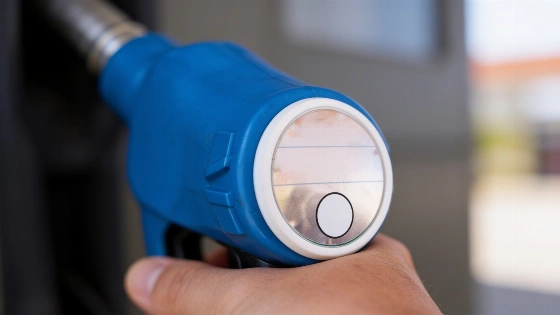
Bright pink fuel pumps have started to appear at Repsol stations across Spain, offering drivers a new 100% renewable alternative to traditional petrol and diesel. The move marks a significant step in the country’s transition toward cleaner mobility, with practical implications for motorists and the energy sector.
At several Repsol service stations in Spain, a striking new detail has caught the attention of drivers: fuel pumps painted in vivid pink, dispensing a 100% renewable fuel. This visual change is more than a marketing move—it represents a concrete step in the country’s evolving approach to sustainable mobility, as Spain navigates the complex transition from combustion engines to electric vehicles.
While the automotive industry is investing heavily in electric cars, the reality is that millions of combustion vehicles remain on Spanish roads. For these drivers, the arrival of renewable fuels offers a practical bridge. According to Repsol, these new fuels are chemically similar to conventional petrol and diesel but are produced from non-fossil raw materials, helping to reduce net CO2 emissions without requiring any modifications to existing engines.
Renewable vs. Synthetic Fuels
It’s important to distinguish between renewable fuels and synthetic alternatives like e-fuels. E-fuels are created using green hydrogen—produced via water electrolysis powered by renewable energy—and carbon dioxide captured from the atmosphere. When burned, they release only the CO2 used in their production, resulting in a near-zero net emissions profile. However, e-fuels remain scarce and expensive, with production costs expected to keep prices between 3 and 4 euros per litre even by 2030. Their limited availability means they are not yet a mainstream option at Spanish filling stations.
In contrast, Repsol’s renewable fuels are derived from biological sources such as biomass and organic waste—including agricultural, municipal, and forestry residues—or from non-biological renewable sources (RFNBOs). This approach allows for immediate integration into the existing fuel infrastructure, making it possible for drivers to fill up with renewable diesel or petrol at select stations simply by choosing the pink pump.
Nexa 95: Expanding the Offer
Repsol has already established its Diesel Nexa as a renewable option compatible with current combustion engines, requiring no technical adjustments. Now, the company is rolling out Nexa 95, a renewable petrol that can be used in any standard car or motorcycle. The new fuel is available at a modest premium—about 9 cents more per litre than standard 95-octane petrol—making it a realistic choice for environmentally conscious drivers who are not yet ready or able to switch to electric vehicles.
Both renewable diesel and petrol are designed for seamless use, allowing motorists to adopt cleaner fuels without changing their vehicles or habits. This practical advantage could accelerate the adoption of renewable fuels during the years it will take for Spain’s vehicle fleet to become predominantly electric.
Pilot Project and Regional Rollout
Repsol recently launched a pilot project in Spain in partnership with Toyota, BMW, and Bosch to test the real-world performance of vehicles running exclusively on 100% renewable petrol. Over the next six months, a fleet of around 20 BMW and Toyota cars will travel Spanish roads, refueling only with Nexa 95. Bosch will provide digital fuel traceability to ensure transparency throughout the trial. The goal is to demonstrate that renewable fuels can be scaled up to support large-scale decarbonization of European mobility, using a technology-neutral approach that includes both electric and combustion vehicles.
Currently, 30 Repsol stations across Madrid, Catalonia, Valencia, the Basque Country, and Aragón offer Nexa 95 renewable petrol, with plans to expand availability in the coming years. This regional rollout is part of a broader trend in the Spanish energy sector, as companies seek to balance the push for electrification with practical solutions for the existing vehicle fleet.
Context and Outlook
The introduction of renewable fuels at Spanish service stations reflects a pragmatic response to the challenges of decarbonizing transport. While electric vehicles are gaining ground, the transition will take time, and renewable fuels offer an immediate way to cut emissions from millions of cars already on the road. This approach is echoed in other parts of Europe, where manufacturers and energy companies are exploring a mix of solutions to meet climate targets.
For drivers, the pink pumps at Repsol stations represent a new choice—one that doesn’t require a leap into the unknown, but rather a small, practical step toward cleaner mobility. As the market evolves, the coexistence of electric, hybrid, and renewable-fueled vehicles is likely to define Spain’s roads for years to come. For those interested in how the electric vehicle market is developing alongside these innovations, a recent analysis of the BYD Atto 2’s entry into Spain’s mainstream market offers further perspective: see how new electric SUVs are challenging traditional models.
Spain’s energy transition is not a single-track journey. The arrival of renewable fuels at the pump is a reminder that the path to sustainability will be shaped by a blend of new technologies, consumer choices, and incremental changes—each marked by visible signals, like the pink pumps now appearing across the country.