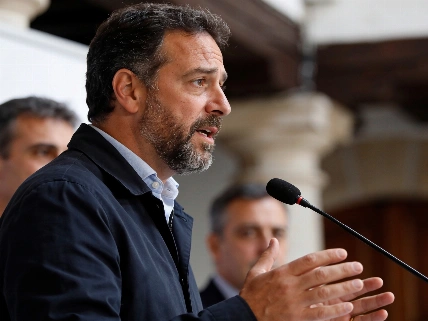
Ripoll’s mayor appointed her 19-year-old daughter as an interim police officer. The process, marked by urgency and direct selection, has sparked debate over transparency. Key decisions were made by the mayor, despite legal requirements.
The appointment of Guinadell Orriols, the 19-year-old daughter of Ripoll’s mayor Sílvia Orriols, as an interim local police officer has ignited controversy in the Catalan town. The selection, conducted under urgent procedures, saw the mayor herself designate the tribunal responsible for evaluating candidates, despite legal frameworks that typically require officials to abstain from such involvement when family members are concerned.
The process began on June 11, when Ripoll’s municipal government announced an urgent call to fill a temporary police vacancy. The requirements were minimal: candidates needed to be over 18, hold a high school diploma, demonstrate intermediate Catalan proficiency, and possess a driving license. Prior police experience was considered an advantage. The application window lasted just 12 days, and the selection was carried out through a direct process permitted by law in urgent cases.
Despite the mayor’s public insistence that she did not influence the outcome, official documents show that Sílvia Orriols played a decisive role after the application period closed. On June 30, she issued a decree appointing a sergeant and two corporals to the selection tribunal, and set the terms, evaluation criteria, and schedule for the tests. The decree, signed by the municipal secretary Gerard Soldevila, also justified the urgency by citing a critical operational situation affecting public safety in Ripoll, a town of 10,600 residents.
During a recent council meeting, the mayor defended her actions, stating that she neither favored nor blocked her daughter’s candidacy. She emphasized that her daughter achieved the highest scores in all tests and that she had abstained from direct participation in the process. However, the legal notice for the selection referenced regulations requiring officials to recuse themselves from any stage of a hiring process involving direct relatives, a point that has fueled further debate.
To address potential conflicts of interest, the final appointment decree was signed by councilor Gaspar Viñas Codina and the municipal secretary, following a formal delegation of authority on July 3—the same day the five remaining candidates underwent their final interviews. Notably, the official result of the selection has yet to be published in the Boletín Oficial de la Provincia de Girona or the Diario Oficial de la Generalitat de Cataluña, despite the appointment taking effect on July 17.
The secretary of the municipality maintained during the council session that the urgent procedure did not require a full selection process, asserting that no irregularities occurred. Nevertheless, the case has drawn attention to the broader issue of transparency and the use of urgent hiring mechanisms in local administrations. Similar debates over the integrity of public appointments have surfaced elsewhere in Catalonia, as seen when political divisions marked the reappointment of the Síndic in Barcelona’s city council, detailed in this report on the city’s ombudsman selection.
Guinadell Orriols is expected to assume her new duties in the coming days. The urgency cited in the initial call was reiterated in the appointment decree, which described the situation as one of “maximum urgency.” The case is particularly notable given Sílvia Orriols’s frequent criticism of institutional favoritism in the Catalan Parliament, where she has denounced the use of public resources for personal or party gain. Now, her own administration faces scrutiny over adherence to ethical standards in municipal hiring.
In Spain, urgent hiring procedures are legally permitted in cases where essential public services are at risk, but they are intended to be exceptional and subject to strict transparency requirements. The controversy in Ripoll highlights ongoing challenges in balancing the need for rapid staffing with the imperative to avoid conflicts of interest and maintain public trust in local institutions.