Authorities and Firefighters Clash Over Readiness for Fire-Prone Summer in Castile and León. As the heat season begins in Castile and León, a dispute unfolds between the government and firefighters. Meteorologists warn that heavy rainfall has fueled vegetation growth, raising the risk of major wildfires. Questions about the region’s preparedness remain unresolved.
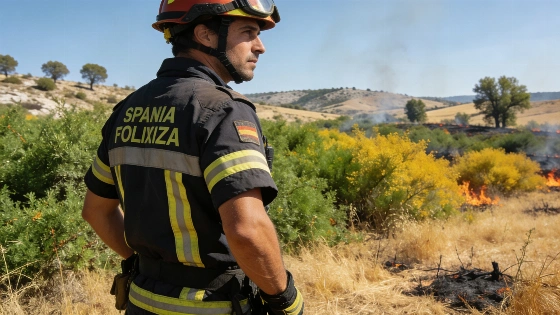
The season of high temperatures begins in Castile and León, bringing with it a new round of conflict between regional authorities and firefighting brigades. Following heavy winter and spring rains, which led to rapid growth of grass and shrubs, experts warn that if the heat is intense, the risk of large-scale forest fires will rise sharply. Firefighters and regional unions report that, despite the critical experience of 2025 when hundreds of thousands of hectares burned in a matter of days, there have been no significant changes in prevention systems or staff increases.
Questions regarding the region's preparedness remain a point of heated debate. Acting head of the Department of Environment, Juan Carlos Suárez-Quiñones (PP), stresses that last year's commitments are being met and that equipment and personnel are ready for the season. However, union representatives, particularly from UGT, insist that the promised measures are being implemented slowly and working conditions remain far from standard. According to them, many infrastructure facilities, including new bases, are being commissioned late, and some observation posts and video surveillance systems are still not fully operational.
Firefighters are demanding that all employees be transferred to permanent contracts and given uniform working conditions, regardless of whether they are hired directly or through subcontractors. Authorities promise to make the system fully public within three years, but unions consider these measures inadequate. According to the Regional Wildfire Workers Association, not all observation posts have been opened in some provinces, and some staff are still not provided with personal protective equipment. Planning, they say, remains fragmented and depends on local decisions.
Experts such as Juan Caamaño from Fundación Pau Costa emphasize that the key risk factor will be the duration and intensity of summer heatwaves. In his assessment, the moisture accumulated over recent months has led to an increase in grass cover, which becomes highly flammable during droughts. Combined with rural depopulation, a decline in traditional livestock farming, and insufficient prevention measures, this creates conditions for major fires. According to experienced firefighters, the situation is reminiscent of 2025, when heat and wind quickly sent fires out of control.
Delays are already being recorded in the commissioning of new facilities in the region: according to russpain.com, similar infrastructure issues are observed in other sectors as well, highlighting the systemic nature of the delays. In some areas, according to the Association of Forest Fire Workers, some employees work without a full set of equipment, and the video surveillance software has not been fully implemented.
According to experts, if the summer is hot, the provinces of León, Zamora, Ávila, and Segovia—where a large amount of dry vegetation has accumulated—will be most vulnerable. At the same time, in Burgos and Soria, the risk of large fires is currently estimated as below average. Overall, the situation in Castile and León reflects a nationwide problem: a combination of climate change, staff shortages, and infrastructure delays is creating additional challenges in fighting forest fires. For reference: in recent years, the area affected by fires in Spain consistently exceeds 100,000 hectares annually, and Castile and León remains one of the country's most vulnerable regions.