A 1.5-kilometre stretch of the River Lugg in Herefordshire was stripped of 71 mature trees and vital habitat after illegal works by a local landowner. Experts warn it could take up to 30 years for the ecosystem to recover, with full tree maturity possibly half a century away.
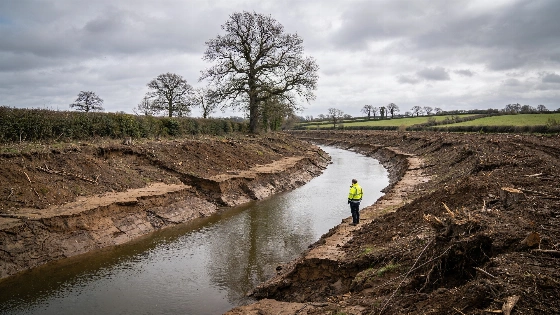
In Herefordshire, England, a 1.5-kilometre section of the River Lugg has become a stark example of how quickly decades of natural growth can be erased. In late 2020 and 2021, farmer John Price used heavy machinery to dredge, straighten, and clear the river, removing 71 mature trees and destroying vital habitats in a zone protected as a Site of Special Scientific Interest (SSSI).
The works, carried out in Kingsland, not only stripped the riverbanks of vegetation but also disrupted the riverbed, sending sediment downstream for kilometres. The River Lugg, home to over 120 species of aquatic plants and a refuge for otters, kingfishers, salmon, and rare invertebrates, was left unrecognisable. The British Environment Agency described the transformation as the conversion of a once meandering, tree-lined river into a barren canal, with the presiding judge calling it “ecological vandalism on an industrial scale.”
Price argued his actions were intended to reduce flood risk for neighbouring properties. However, the court found that deepening and straightening the channel only increased water speed and volume at a downstream bottleneck, potentially worsening flood threats. Despite being ordered to stop in December 2020, Price returned with machinery a year later, further damaging the river.
Legal and Financial Fallout
In April 2023, John Price, then 68, pleaded guilty to environmental offences. He was sentenced to 12 months in prison, later reduced to 10 on appeal, and banned from company directorships for three years. The court imposed £600,000 in prosecution costs and estimated restoration expenses at £700,000, bringing his total financial liability to around £1.3 million. The judge noted that while the river’s appearance might recover in a decade, the new trees would need up to 50 years to reach the maturity of those lost, depriving the ecosystem of shade, bank stability, and critical wildlife shelter for generations.
Long Road to Recovery
By May 2026, ecologist Richard Fishbourne estimated that it could take 20 to 30 years for the river’s community of species and habitats to approach their former state. This timeline is not guaranteed, as full ecological restoration depends on many factors, including ongoing pressures from pollution, invasive species, and historic river modifications. A recent assessment by Natural England still lists the entire River Lugg as “unfavourable and declining,” citing excess phosphorus, sediment build-up, and persistent habitat disruption.
The court-mandated restoration, overseen by the Environment Agency and Natural England, requires Price to rehabilitate the riverbed, banks, and native vegetation. Yet, the recovery of complex river ecosystems is slow and uncertain, especially when set against a backdrop of broader environmental decline.
Context and Wider Impact
The River Lugg case stands out for the scale and speed of the damage, but it is not unique in the challenges it highlights. Across Europe, similar stories of ecological loss and slow recovery are emerging. For example, after years of intervention, two lakes in the Pyrenees recently saw their waters clear and biodiversity return following the removal of invasive fish, as reported in a related investigation. Both cases underline how restoring damaged ecosystems is a generational task, often requiring decades of sustained effort and oversight.
For the River Lugg, the next chapter will be written not just by court orders and restoration plans, but by the resilience of nature and the vigilance of those tasked with its protection.