Telecinco’s Rueda la letra has reignited the battle over TV quiz formats in Spain. Viewers and industry insiders point to striking similarities with Pasapalabra. Legal action now looms as the competition for audience and rights intensifies.
The debut of Rueda la letra on Telecinco has triggered a wave of criticism and legal speculation, with many viewers and industry insiders noting how closely the new quiz show resembles Pasapalabra. The first episode drew immediate reactions online, and many expect Atresmedia and ITV Studios to take legal action, arguing that Rueda la letra copies their well-known format.
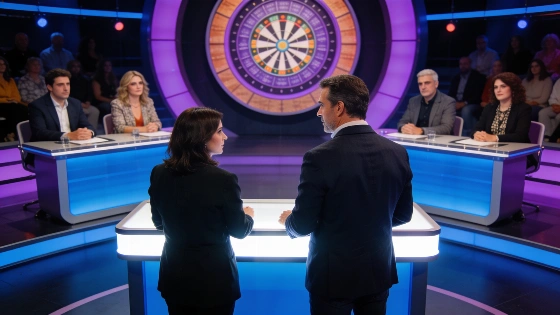
The similarities go beyond quiz mechanics. Rueda la letra mirrors Pasapalabra in its structure, camera work, team arrangements, pacing, and even its color scheme. The main differences are surface-level: blue and purple now dominate the set, and "paso" replaces "pasapalabra." Still, anyone familiar with the original show will recognize the format instantly.
Telecinco scheduled the premiere of Rueda la letra for September 7, 2026, at 19:00, deliberately avoiding direct competition with Pasapalabra on Antena 3.
Telecinco’s team, led by Carlos Sobera and former Pasapalabra director Rafa Guardiola, insists Rueda la letra is its own show. They highlight new rounds like ¡He dicho! and Palabras Ocultas, which borrow ideas from other Spanish quiz shows such as Saber y ganar and Reacción en cadena. But the musical segment Cantando espero is nearly identical to La Pista Musical, and the betting round Con dos palabras draws from 25 palabras and Password. Even fans who support the new show admit it feels very familiar, and the influence of Pasapalabra is hard to miss.
The main dispute centers on the final round, now called La Rueda. This segment, with 25 letters and rapid-fire definitions, is based on the original 21x100 format owned by MC&F;, whose rights Mediaset secured after a Supreme Court ruling forced Atresmedia to drop El Rosco from Pasapalabra. Antena 3 replaced it with AlaZ, but MC&F; and Mediaset have already challenged that change, saying the new version still copies too much of the original’s style and presentation.
As the legal battle heats up, the industry is watching to see if Atresmedia will respond, not just over La Rueda, but over the entire structure of Rueda la letra. The show’s setup—two contestants, four celebrities, alternating rounds of knowledge and entertainment, and a final duel for the jackpot—follows the formula that has defined Pasapalabra for years. Even the rotation of celebrity guests every three episodes is the same.
According to official Mediaset and Telecinco announcements, the new final round was renamed La Rueda to bypass brand restrictions tied to El Rosco, whose rights are held by ITV. Despite the rebranding, the core mechanic of 25 letters and quick definitions remains central, and the show features a 200,000 euro jackpot with former Pasapalabra champions participating.
Controversy aside, Rueda la letra has quickly found an audience. Carlos Sobera’s experience as host keeps the show moving, and the straightforward rules make it easy for viewers to follow along at home. The final round remains one of the most engaging on Spanish television, and the show’s familiar format is both its main draw and its biggest legal risk.
Spain’s TV market has a long history of format disputes, but the fight over Rueda la letra and Pasapalabra highlights how thin the line is between inspiration and imitation. The outcome could change how networks handle quiz show development and rights. As recent media coverage shows, the stakes for audience loyalty and intellectual property are high.
Legal battles over TV formats are nothing new in Spain, but the Rueda la letra case stands out for how openly it borrows from its rival. Mediaset hasn’t reinvented the format, but it has pushed it far enough to force another legal showdown. Now it’s Atresmedia’s move, and the result will show whether Spanish viewers are seeing genuine reinvention or just another round of legal sparring dressed up as entertainment.