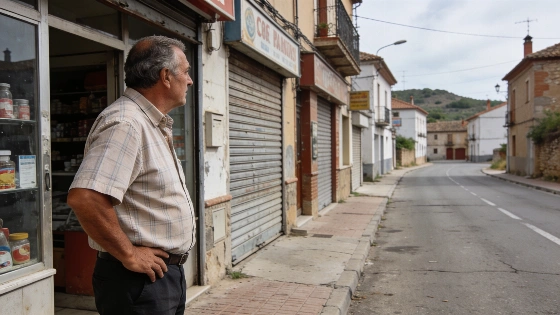
Thousands of small businesses have disappeared from rural Spain, leaving entire regions struggling to maintain jobs and attract new residents. The challenge is not just about population loss but also about the growing burden of bureaucracy.
In rural Spain, the loss of a single shop can set off a chain reaction. It is not just about money. When a business shuts down, the whole village feels it. Some places never recover.
CEPYME reports that more than 22,700 micro-enterprises have closed since 2020. The reasons are clear. Costs keep rising. Profits shrink. Rules and paperwork pile up, built for big cities, not small towns. For many rural business owners, staying open is a daily struggle.
In October 2026, the Spanish government removed the requirement for at least three years of prior activity from the Reinicia+ FAIIP DANA funding mechanism, making it easier for new rural businesses to access financial support.
Numbers only tell part of the story. When a rural business closes, jobs vanish. Families leave. The area becomes less attractive to newcomers and investors. It is a tough cycle to break. Young people are already scarce. Cities pull them away.
Most debates focus on roads, internet, and public services. But there is another problem. Bureaucracy. Small business owners in the countryside face endless forms and confusing rules. They get little help. The problem is not the rules themselves, but the lack of support to deal with them. Many feel lost in paperwork.
To stop depopulation, Spain needs more rural businesses. Both public and private groups try to bring money and projects to these areas. But if the paperwork stays this hard, many plans will fail before they start. As shown in a recent report, the gap between rural and urban economic opportunities is growing. Rural Spain is falling behind.
According to an official statement from the Spanish government, the agri-food, fisheries, and food sectors are recognized as strategic not only for their economic contribution but also for their role in maintaining social and territorial cohesion in rural areas. In 2026, direct subsidies totaling €4.8 million were allocated, including support for rural development organizations and networks of agricultural test farms.
Technology is starting to help. Distance used to mean isolation. Now, digital tools let even the smallest business get advice and automate tasks. This is not just about saving time. It is about staying alive. Digital solutions can make paperwork easier and help rural owners compete.
But the main problem is still there. Existing businesses need to do more than just survive. Attracting new companies matters, but so does helping those already in place. Red tape cannot keep choking them. For rural economies to have a future, paperwork must get simpler. Every hour counts in these towns.
Spain’s National Strategy for the Demographic Challenge sets big goals for rural life. But plans alone are not enough. Success depends on real help for people running businesses every day. The future of rural Spain will be decided by what happens in these small shops and offices. If Spain wants its villages to live, it must let those who stay do more than just hang on. They need a chance to build and grow.