A Ryanair flight from Greece to Germany faced a critical emergency after an engine blade broke off, shattering a window and nearly pulling a passenger out. Quick action by his wife and others prevented tragedy. Investigations are underway.
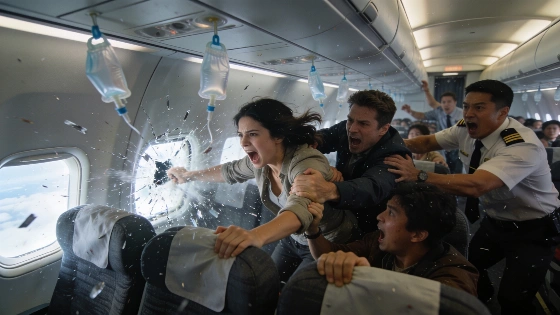
A Ryanair flight operating between Thessaloniki, Greece, and Memmingen, Germany, was forced into an emergency situation just minutes after takeoff when a mechanical failure led to a rapid cabin decompression. The incident, which occurred shortly after departure, saw a passenger nearly sucked out of the aircraft after a piece of the right engine broke off and shattered the window next to his seat.
According to accounts from those on board, Ljubisa Karovi was pulled halfway out of the plane, with his wife, Svetlana Grkovi, holding onto his legs to prevent him from being ejected. The couple, traveling together, faced a terrifying ordeal as Karovi lost consciousness multiple times during the struggle. Other passengers quickly joined in to help pull him back inside, with the seatbelt playing a crucial role in keeping him from being fully expelled from the aircraft.
Grkovi later described the chaos, stating that her husband was left with serious injuries, including burns and trauma to his hand, and remains hospitalized in Greece in a state of shock. She expressed deep gratitude to the fellow travelers who assisted in the rescue, noting that she would like to thank them personally if given the chance. The rapid decompression caused panic throughout the cabin, with oxygen masks deploying and passengers fearing for their lives as the situation unfolded.
Eyewitnesses recounted scenes of confusion and distress, with some initially believing that an emergency exit had been mistakenly opened. The injured passenger was reported to have bled heavily and fainted repeatedly, likely due to the sudden loss of oxygen and the shock of the event. The aircraft involved, a Boeing 737-800 operated by Malta Air for Ryanair, was flying over North Macedonia at the time of the incident. The cause of the engine failure and subsequent window breakage is now under investigation by the Hellenic Air Accident Investigation and Aviation Safety Board (HARSIA), with support from Boeing, the US Federal Aviation Administration (FAA), the European Union Aviation Safety Agency (EASA), and the US National Transportation Safety Board (NTSB).
While the aviation sector has faced various emergencies in recent years, this incident stands out for the dramatic rescue and the rapid response of passengers and crew. The event has drawn attention to the importance of safety protocols and the critical role of seatbelts during unexpected emergencies. For context, the aviation industry regularly reviews safety measures following such incidents, much like the scrutiny seen in other high-profile transport events, including those covered in sports and public gatherings, as highlighted in reports such as the recent coverage of major event preparations.
Ryanair and aviation authorities have not yet released further details on the timeline for the investigation or any potential operational changes. The incident underscores the unpredictable nature of in-flight emergencies and the resilience required from both passengers and crew in critical moments. As the investigation continues, attention remains focused on the recovery of the injured passenger and the findings that may influence future safety standards across European air travel.