Deliberate sabotage on Dutch rail lines forced major train stoppages just hours before the royal opening of Parliament. The incident triggered widespread disruption and prompted a national security investigation.
Just hours before King Willem-Alexander was due to open the new parliamentary session, train traffic across the Netherlands was brought to a standstill by sabotage at more than 20 sites. The attack focused on rural tracks in central and eastern regions, stopping trains and causing major road delays. The incident exposed a weak point in the country’s transport system.
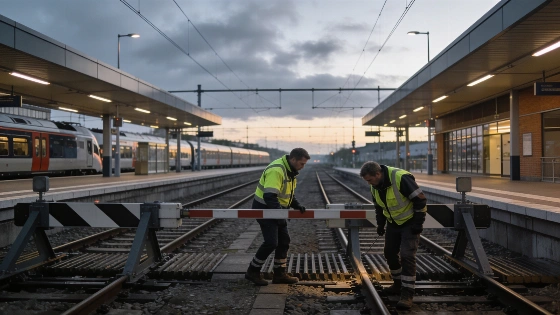
ProRail, which manages the rail infrastructure, said metal pipes had been deliberately attached to tracks at several locations. Spokesperson Joke van der Cruysen confirmed the objects were placed to disrupt service, forcing trains in the area to stop and causing widespread delays, including on international routes to Germany.
According to DutchNews and Reuters, the sabotage disrupted both domestic and international trains, with key connections to Germany delayed or canceled.
One train hit a pipe, but no one was hurt. The sabotage also blocked road crossings, adding to the problems for commuters and freight. Police and the Dutch intelligence agency AIVD have started a joint investigation, but as of Tuesday, there were no suspects or known motives.
The timing was hard to ignore. The royal opening of Parliament is a major event, with King Willem-Alexander set to present the government’s budget plans for 2027. These plans have already sparked months of protest, with unions opposing social benefit cuts and farmers planning demonstrations in The Hague over nitrogen pollution rules.
Such large-scale disruption is rare in the Netherlands, which is known for its reliable rail network. The incident forced authorities to reroute or cancel trains, leaving thousands stranded and raising concerns about the security of critical infrastructure. International trains to Germany were also affected.
According to NBC News and India Today, the AIVD is working with police to find out who was behind the sabotage, but so far there are no leads. ProRail has called the attack highly unusual and said it highlights a serious vulnerability in the country’s infrastructure.
Security services are treating the sabotage as a major threat, with both police and intelligence agencies involved. The deliberate nature of the attack and its timing before a politically sensitive event have raised concerns about possible motives and future risks. With public safety and political stability at stake, how the authorities respond will shape how similar threats are handled in the future.
The Dutch government now faces pressure to deal with both the immediate disruption and the deeper tensions behind recent protests. The sabotage shows that even well-run systems can be brought down by targeted attacks. As seen in other recent incidents, such as the reported shooting in Spain, the overlap between public events and security threats is growing more complicated. The Dutch case is a clear example of how infrastructure sabotage can quickly become a national crisis, especially when timed with major political events. The government’s response will be judged not just on technical fixes, but on its ability to address the unrest that makes such attacks possible.