At the prices cited in the account, four weeks of Wegovy at its initial doses costs €179.89; a Mounjaro 15-milligram pen with four weekly doses costs €446.07. The account says Spain’s National Health System does not finance either medicine for obesity treatment.
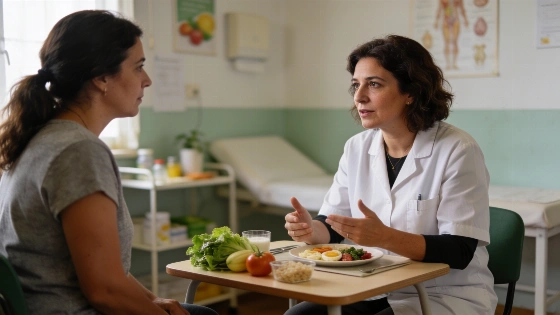
Nutritionist Salena Sainz says some patients stop treatment because they can no longer afford it. Others tell her their hunger returned more strongly than expected, and some regain weight. “A mi consulta llegan llorando,” she says, meaning “They come to my consultation in tears,” translated from Spanish.
By the time they see her, the decision to stop has already been made. They want to know what to do after the final dose. Sainz says some people have told her they seek the injections on the black market.
Her work with these patients grew out of her own professional path. After leaving pharmacy, she began working with people with diabetes, a field she says became her vocation. She opened Naturae Nutrición in Laredo, Cantabria, and she also has diabetes.
During pregnancy, Sainz says, she suffered a hyperglycaemic coma. Later she began losing her sight and wondered whether her treatment might be involved, but her endocrinologist gave her another explanation. She says the medicine controlled her blood glucose well: “El azúcar me lo deja como un reloj,” or “It keeps my blood sugar like clockwork,” translated from Spanish. Concerns about her eyesight led her to study GLP-1 and consider changing treatment.
GLP-1 is released by the body when people eat and helps regulate appetite, though its effect is brief. Medicines acting on the same pathway are designed to prolong it. Sainz says her book, ‘La revolución del GLP-1 natural’, is not opposed to medication. Its ten habits cover food shopping and meal times, with practical advice on exercise and combining foods.
She began with a PDF for her consultation, then showed it to a friend who thought it could become a book. When Sainz asked where she could send it, since she knew nobody in publishing, her friend suggested Anaya, the publisher of her school textbooks. Oberon published the resulting book.
Sainz also recalls a patient she had supported for an eating disorder. The woman returned from a medical appointment with a prescription and reported being told the injection would “disolver la grasa,” or “dissolve the fat,” translated from Spanish. Sainz says she wondered whether anyone had asked about the binge eating and vomiting the patient had left behind.
That experience informs Sainz’s emphasis on what she calls “cultura nutricional” and “cultura médica”: understanding why a medicine has been prescribed, knowing what to do when eating becomes difficult and having someone to contact before the next appointment. She says she managed her own diabetes with her training and financial resources, alongside support from her parents. She argues that treatment should be funded for people who need it, with follow-up.
She gives free talks at a diabetes association in Santander and says she has turned down offers to move to Madrid or Barcelona so she can continue seeing patients able to pay for consultations in Laredo. She says online searches can lead people to shakes or pills promoted with before-and-after images; in some, she observes, the coffee has not moved. Sainz says she would be satisfied if her book helped twenty women leave that cycle, and wants to teach them so they cannot be influenced by it.
A separate debate over public spending has included Feijóo’s pension pledge, a distinct policy issue from the funding of obesity treatment.