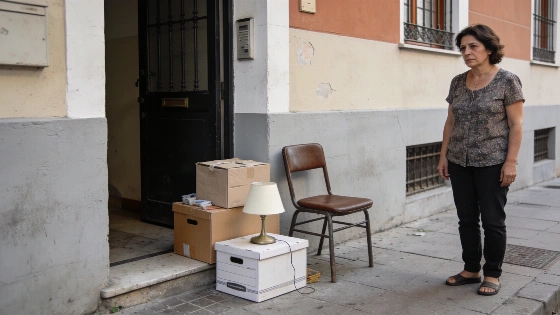
Pedro Sánchez called the eviction of 87-year-old Maricarmen a social tragedy and demanded urgent parliamentary action. He blamed Madrid authorities for failing to protect a vulnerable tenant and said the government would bring its housing decree back to Congress.
Pedro Sánchez has used Maricarmen's eviction to demand urgent action in Congress. The prime minister called the case a social tragedy that public institutions cannot accept. He blamed the Ayuntamiento de Madrid and the Comunidad de Madrid for failing to protect vulnerable people, even though they hold the main powers over social housing.
Maricarmen is 87. She had lived in Madrid's Retiro district for more than 70 years and has a 50% disability, according to reports.
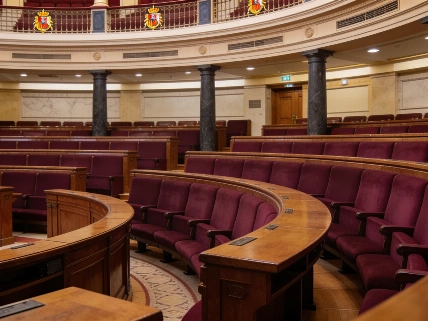
The political fight now centres on a Real Decreto Ley that Congress rejected before the summer. The government and its coalition partners want to bring the measure back. It would strengthen protection for vulnerable tenants and help stop evictions.
Police carried out the eviction of 87-year-old Maricarmen in Madrid on 23 September 2026, despite protests from neighbours and activists.
Police carried out the eviction on 23 September 2026 after neighbours and activists protested. Amnesty International Spain called it a human-rights violation and blamed the failure of state institutions. The Tenants' Union also demanded that Congress approve the housing decree without delay.
Speaking in New York before addressing the United Nations General Assembly, Sánchez said the Government would bring the measure back urgently. He said no procedural option was off the table. His argument was direct: if Congress had approved the decree earlier, Maricarmen would not have been evicted.
He called on parliamentary groups to act with responsibility and empathy. He said similar cases should not happen in Madrid or elsewhere in Spain.
Sánchez also attacked the priorities of Madrid's regional and local administrations. He accused them of focusing more on buying and selling publicly funded luxury homes with large terraces than on protecting vulnerable residents. He criticised Madrid's support for allowing a vulture fund to buy protected housing. He also opposed the region's push to liberalise housing policy.
The immediate responsibility, Sánchez said, lies with the administrations that control housing and social protection. Congress also has a decisive role. Without stronger legal protection, vulnerable people remain exposed to evictions involving investment funds.
The Government is trying to reintroduce the housing package and find support among opposition groups and other parliamentary forces. Reports say it still lacks a guaranteed majority. Earlier anti-eviction measures failed in Congress, and separate housing proposals later failed as well. Those defeats are now part of the political argument over Maricarmen's case.
Before the eviction, the Ministry of Housing publicly urged Madrid’s mayor, José Luis Martínez-Almeida, and regional president Isabel Díaz Ayuso to intervene urgently and stop the procedure. The appeal highlighted the dispute over which level of government should provide immediate protection to vulnerable tenants.
The Ministry of Housing, led by Isabel Rodríguez, had already publicly urged Madrid mayor José Luis Martínez-Almeida and regional president Isabel Díaz Ayuso to stop the eviction. The appeal exposed the dispute over which level of government should protect vulnerable tenants in an emergency.
Housing groups and human-rights organisations see the case as evidence of a wider institutional failure. The eviction has become part of Spain's housing crisis, which includes rising rents, disputes involving vulture funds and weak protection for vulnerable renters.
Housing was not the only domestic issue raised at the press conference. Sánchez defended Morocco's response to the crisis that began in Ceuta on 29 July. Moroccan armed forces and police were deployed from 30 July, he said. He also referred to alerts about a possible new influx on 15 August and to attacks on the border in Melilla. His argument was that Morocco had acted to control its frontier.
He said European leaders had shown considerable empathy towards Spain's position. He rejected language describing a 10-year-old child in Ceuta as an invader.
Sánchez also reaffirmed his confidence in José Luis Rodríguez Zapatero. The former prime minister had told the judge investigating the Plus Ultra case that most of the jewellery found in a safe at his office came from a gift from Saudi Arabia in 2007.
Sánchez invoked the presumption of innocence. He did not say whether Zapatero should return the jewellery because possessing it could conflict with the code Zapatero approved while in office.
On the opening of the oral trial involving Begoña Gómez, the prime minister offered no new assessment. He said the defendant has her own identity and is also his wife. He then repeated that he had already said everything necessary about the case.
The New York appearance brought several politically sensitive issues together. The eviction created the clearest practical demand because Sánchez is asking Congress to approve a specific measure after acknowledging that the current response did not prevent Maricarmen from losing her home.
That leaves Congress with an immediate test. The case should not be reduced to another exchange of accusations between Madrid and the central Government. The reported result is plain: a vulnerable woman was evicted while the proposed legal protection remained unapproved.
Sánchez's response is politically forceful, but it still depends on parliamentary approval and action by the administrations that already hold housing powers.