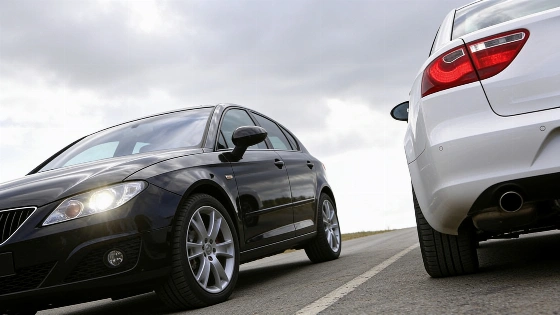
Seat’s Exeo set out to give Spanish drivers a taste of premium quality, borrowing Audi A4 bones. The car never caught on with the masses and left the market quietly after a short run.
Seat ended production of the Exeo in 2013, closing the book on one of Spain’s few attempts to break into the premium sedan market with German hardware at its heart. The Exeo rolled out of Martorell, built on the Audi A4 B7’s platform and tooling. This wasn’t just a badge swap. Seat aimed to lift its image and tempt Spanish buyers with something more refined, all while staying inside the Volkswagen Group fold.
The Exeo made its debut at the Paris Motor Show in October 2008. The timing was tough. Europe’s car market was bracing for a downturn. Renault was rolling out the third-gen Mégane, Lexus had a convertible IS on display, and Chevrolet’s Cruze was about to shake up GM’s European plans. Seat’s move to bring over entire production lines from Germany to Spain was both practical and a statement. It cut development costs and put proven machinery back to work. The name “Exeo” itself, drawn from the Latin “Exire,” hinted at a push to go further.
По данным отраслевых аналитиков, завод в Марторель, где производился Exeo, впоследствии был признан одним из наиболее эффективных в Европе по уровню автоматизации и качеству сборки.
The Exeo stood apart from the rest of the Seat lineup. It kept the Audi A4 B7’s longitudinal engine layout. Buyers could pick a sedan or a wagon. Inside, the dashboard and trim came straight from the A4 Cabrio, right down to the triple central air vents and soft-touch plastics. For many, this was the best quality ever seen in a Seat. Details like a hidden navigation screen and new climate controls set it above the brand’s usual practical fare.
Seat never meant for the Exeo to replace the Toledo. Instead, it sat above it, sharing showroom space with two generations of Toledo and aiming at drivers who wanted more comfort and polish. The first Exeos reached customers in December 2008. Over six years, Seat built 81,605 units. That number shows how niche the car was, and how Spain’s economic troubles held back demand in its main market.
At launch, the Exeo offered three petrol engines—102, 150, and 200 horsepower—and two diesels with 143 and 170 horsepower. In 2009, a 2.0 TDI with 120 horsepower and a manual gearbox joined the range. That version quickly became a top pick. By 2010, Seat refreshed the petrol lineup with 120, 160, and 211 horsepower options. The 211-horsepower model could sprint from 0 to 100 km/h in 7.1 seconds and hit 244 km/h flat out.
Согласно публикациям ведущих испанских деловых изданий, после завершения выпуска Exeo завод в Марторель был переориентирован на производство новых моделей и электромобилей, что позволило сохранить рабочие места и повысить конкурентоспособность предприятия на европейском рынке.
Seat gave the Exeo a mild update in 2011. The car got sleeker LED lights and new front seats to help with rear legroom complaints. Still, sales kept slipping. Prices edged up, and Spain’s economic crisis deepened. The Exeo never got a direct replacement.
The Exeo found a second life with Spanish law enforcement and even the Italian Polizia. Many served as patrol cars or unmarked vehicles for the Guardia Civil de Tráfico. A handful of dark blue Exeos still cruise Spanish roads, a quiet nod to the car’s short but memorable run.
Seat’s push into the premium segment with the Exeo stands out now, especially as new brands chase value buyers in Spain. The Exeo’s story is a case study in timing, ambition, and the limits of badge engineering—even when the badge comes with real German roots.
In the end, the Exeo is a curious chapter in Seat’s history. It aimed high and delivered real quality, but market forces proved too strong. The car’s real legacy? It showed that Spanish factories could match German standards when given the right tools and the right moment.