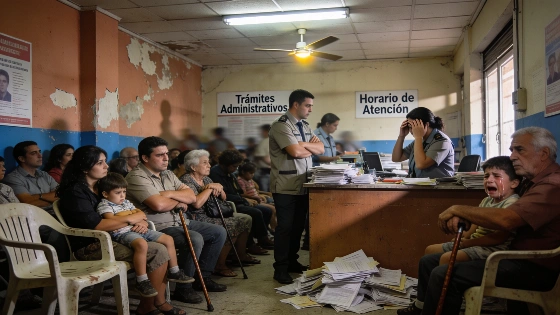
Murcia's absenteeism rate has reached 7.7%, surpassing the national figure. Sick leaves in the region now last an average of 61 days, 17 days longer than across Spain. The trend is becoming a structural issue for local employers.
Absenteeism in the Region of Murcia has become a persistent challenge, with the latest figures showing the problem is not only entrenched but also worsening. The region's absenteeism rate has climbed to 7.7%, outpacing the Spanish national average of 7.2% and marking a slight increase from last year's 7.6%. This ongoing rise, highlighted by Alfonso Hernández Quereda, dean of the Colegio de Graduados Sociales de la Región de Murcia, signals that absenteeism is no longer a sporadic issue but a structural one affecting the local workforce.
One of the most striking aspects is the duration of medical leaves. In 2025, sick leave in Murcia averaged 61.38 days, a full 17 days longer than the national average of 44.14 days. This 39% gap places additional strain on businesses and public services. Hernández Quereda emphasized that the extended duration of absences cannot be attributed solely to employee motivation. Factors such as an aging workforce, the nature of prevalent illnesses, and the physical demands of key regional industries all contribute to the trend.
Medical leave specifically accounts for about 6.1% of absenteeism in Murcia, slightly below the national figure of 6.2%. However, the overall absenteeism rate in the region remains higher than the Spanish average. Across Spain, the number of temporary incapacity cases reached approximately 1.24 million in 2025, a 14% increase compared to 2023. Over the period from 2019 to 2025, the cumulative rise in such cases is close to 25%.
The industrial sector in Murcia is particularly affected, recording an absenteeism rate of around 8% in the first quarter of 2026. Although this is a slight improvement from 8.1% the previous year, the sector continues to face challenges linked to physically demanding roles, repetitive tasks, and an aging workforce. Musculoskeletal disorders, common in jobs requiring continuous effort or awkward postures, are a leading cause of absence.
The service sector follows closely, with a general absenteeism rate of 7.8%, of which 6.2% is due to medical leave. Construction and agriculture report slightly lower rates at 6.8%, but these sectors also face significant risks due to the physical nature of the work, frequent injuries, and exposure to harsh conditions. The seasonal nature of agricultural work and the limited influx of younger workers further complicate the situation.
Mental health issues now account for 20.3% of all absenteeism cases in Murcia. While musculoskeletal problems remain the primary cause—representing about 45% of cases—mental health disorders such as anxiety, depression, and stress are increasingly significant. According to Hernández Quereda, these cases often stem from organizational problems, workplace conflicts, and deteriorating work environments, which can ultimately lead to medical leave. Cancer-related illnesses account for around 7% of absences.
Self-employed workers face even longer absences, with the average duration of their sick leave reaching 101.83 days nationwide, compared to 39.29 days for employees under the General Regime. The debate continues between employers and unions over the definition of absenteeism, but Hernández Quereda maintains that all absences from work, justified or not, should be included in the statistics.
For context, absenteeism is a growing concern across Spain, not just in Murcia. The trend reflects broader demographic and economic shifts, including an aging population and the physical demands of traditional industries. The Spanish government and regional authorities have been monitoring these developments, as prolonged absenteeism can impact productivity, healthcare costs, and the sustainability of social security systems. Preventive measures, such as improving workplace conditions and promoting health, are increasingly seen as essential to address the root causes of long-term absences.