The Grec Festival in Barcelona hosted Les Flors Prohibides, a unique choral event focused on children affected by war. The performance stood out for its restraint, collective anonymity, and strong female presence.
At the Grec Festival in Barcelona, the choral performance Les Flors Prohibides delivered a strikingly different approach to solidarity concerts. Instead of loud declarations or celebrity showcases, the event unfolded in near silence, with a focus on subtlety, restraint, and collective expression. The show, organized by Hidden Track Records, centered on the plight of children living through war, particularly referencing Gaza, and used music and silence as its primary language.
Unlike typical benefit concerts, Les Flors Prohibides avoided individual recognition. Nearly twenty artists, predominantly women, performed without introduction or applause for specific names. The only exception was a brief mention of the participating musicians at the end. The stage was shared by emerging talents such as Cora Novoa, Amaia Miranda, Carlota Flaneur, Clara Andrés, Júlia, Marina Herlop, Ferran Palau, Anna Andreu, Meritxell and Judit Neddermann, Sandra Monfort, Selma Bruna, Júlia Collado Riu, Mar Pujol, Clara Peya, Anna Ferrer, Alosa, Tarta Relena, Marina Rosell, and Twin. Their collective presence emphasized community over individual fame.
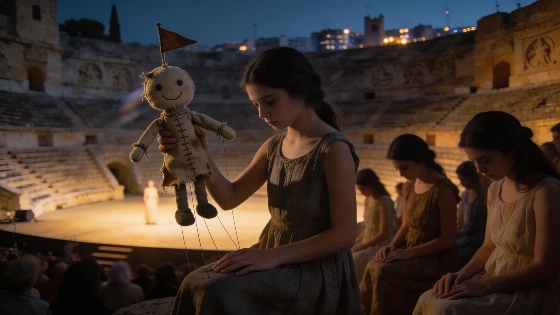
The performance was marked by a deliberate absence of rhythmic percussion, with songs floating between aspirations and laments. The only interruptions to the quiet were the audience's restrained applause and the natural gestures of solidarity among the performers. The event also featured five handcrafted puppets by Mahdi Karera from Khoyout Theatre in Gaza, which had to be smuggled out of the region. One puppet appeared on stage, symbolizing both cultural resilience and the fragility of childhood under conflict.
Louise Sansom, director of Hidden Track Records, addressed the audience briefly, highlighting how the destruction of olive, sycamore, and pine trees in Gaza erases local culture and scars the land. The show’s visual elements, including irregular patterns projected onto the stone walls, reinforced the theme of memory and loss. The absence of male voices and the prominence of ballet dancers added to the sense of renewal and quiet resistance.
Les Flors Prohibides was not only a concert but also a fundraiser for War Child, with a limited-edition album nearly selling out at the venue. The songs, rooted in folk and intimate pop, are also available on digital platforms, extending the event’s impact beyond the festival. The approach of this performance contrasts with the more confrontational tone seen in other recent cultural events, such as the on-air clash on 'Malas lenguas noche' that led to a presenter’s emotional exit, as reported in coverage of Spanish television debates.
The Grec Festival, established in 1976, is one of Barcelona’s most significant cultural events, known for its diverse programming and support for innovative artistic expressions. Les Flors Prohibides stands out for its commitment to anonymity, female leadership, and a message delivered through quiet strength rather than spectacle. The event’s focus on children affected by war aligns with ongoing humanitarian concerns in Spain and across Europe, where cultural initiatives increasingly serve as platforms for social awareness and fundraising.