Spain now pays social security contributions for those caring for dependent relatives at home. This move allows thousands to protect their future pensions without paying out of pocket, but strict eligibility rules and exclusions apply.
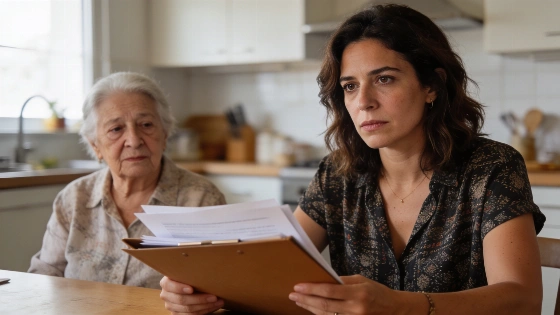
Spain has shifted the responsibility for social security payments from families to the state for people who leave formal work to care for dependent relatives. For many, this means years spent caring at home will now count toward their pension and social protections. The Spanish Ministry of Social Security says the goal is to make sure time spent caring for a dependent relative is recognized for retirement and certain disability or survivor benefits, so caregivers don't end up with gaps in their records.
This support is only available to non-professional caregivers who are officially registered in the Individual Care Program (PIA) for a dependent family member. The state, through Imserso, pays the standard social security contribution, so these years count toward retirement and some other benefits. The amount depends on how severe the dependent's needs are, with the highest coverage for those classified as Grade III. Imserso and the social security system handle the payments and administration, and applications go through TGSS channels.
The contribution base for caregivers is set higher for Grade III dependents, while Grades II and I have lower bases as established by regulation.
Eligibility is strict. Spouses, relatives up to the third degree, and sometimes close friends can apply, but only if the dependent has been granted the economic benefit for family care. You don't need to have paid into social security before, but you can't join if you already receive a retirement or permanent disability pension, or if you're registered as self-employed. Some non-contributory pensions, foreign pensions, and benefits from special regimes like MUFACE or ISFAS also mean you can't take part. These exclusions are listed in official guidance from the Spanish social security administration.
Unemployed people face mixed rules. If you're on full unemployment benefits, you can't join. If you're on part-time unemployment and your base is lower than the caregiver's, you may pay the difference. The subsidy for people over 52 is compatible, so older workers can keep their pension track while caring for family. This is specifically mentioned in government circulars and is seen as important support for older caregivers.
Some people who are still working can also benefit. If your current social security base is lower than what you'd get as a caregiver, you can pay the difference. This matters for workers who cut their hours to care for a dependent, though if you're already on official leave or reduced hours that count for social security, you may not be able to join the scheme for that period. Legal experts say this measure is part of Spain's Law 39/2006 on dependency, which aims to strengthen the rights of family caregivers and expand state support for informal care.
In 2026, several Spanish media outlets reported new developments: the state is now covering social security contributions for main family caregivers, and there are ongoing discussions about reducing the processing time for dependency benefits and increasing public funding for the dependency system.
Timing matters. If you apply within 90 days of the dependent's benefit approval, contributions can be backdated to when the right was granted. If you miss that window, coverage starts from the day the agreement is formalized. You'll need documentation, including the dependency resolution, and you can apply online or with the TA.0040 form.
While this move is similar to other targeted support—like the direct aid for self-employed and businesses in Ceuta reported earlier—the focus here is on protecting the long-term security of unpaid caregivers, a group often left out of social policy debates.
By taking over these social security contributions, Spain is investing in the unpaid workforce that keeps its care system running. The rules and paperwork are still a hurdle, but for those who qualify, the reform offers real protection against losing pension rights for putting family first. The government's decision to cover these contributions shows a recognition that informal care is not just a private issue, but a public good with real social and economic impact.