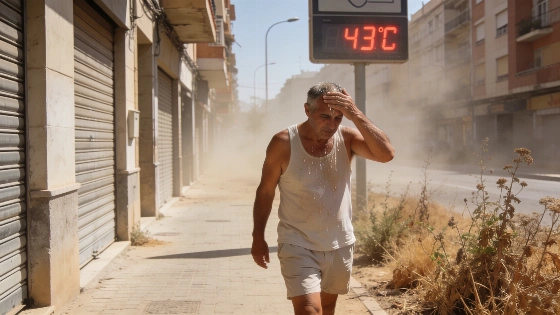
A powerful heatwave will push temperatures in Spain to 43°C. Nights will remain unusually hot, with tropical and torrid conditions in many cities. Saharan dust will worsen air quality across the country.
Spain is bracing for a new surge of extreme heat as the final week of the canícula brings a sharp rise in temperatures, with forecasts pointing to highs of 43°C in several regions. The latest meteorological outlook indicates that a strong anticyclonic system will drive a progressive increase in temperatures, especially from Wednesday, coinciding with a solar eclipse, and peaking on Thursday. Authorities have already issued widespread weather alerts for much of the peninsula, warning of both daytime and nighttime risks.
The most intense heat is expected in the south and interior, particularly in the Guadalquivir valley, where thermometers could reach 43°C. The Ebro valley is also set to experience highs around 41°C, while other parts of Andalusia, Extremadura, and Castilla-La Mancha may see temperatures at or above 40°C. In many areas of the central plateau and eastern interior, 35°C will be easily surpassed. Alongside the heat, Saharan dust will spread across much of the country, reducing air quality and visibility, especially in the southern half and even reaching some northern areas.
What sets this episode apart is not only the daytime heat but also the persistence of high temperatures at night. The combination of a warm air mass and stable atmospheric conditions will prevent significant cooling after sunset. As a result, tropical nights—where temperatures do not drop below 20°C—will become widespread, and many cities will endure torrid nights, with minimums staying above 25°C. On Thursday morning, minimum temperatures are expected to hover around 24°C in Barcelona and reach 25°C in parts of Murcia, Valencia, Alicante, and the Mediterranean coast, including Málaga and Almería. Mallorca is also likely to see minimums close to 25°C. The following night, from Thursday to Friday, will be even more remarkable, with much of the peninsula experiencing minimums above 20°C and the Mediterranean and Balearic areas again facing values near or above 25°C.
According to meteorologist Andrea Danta, the heatwave will be driven by a mass of very warm air from lower latitudes, intensified by a strengthening anticyclonic ridge. The most severe conditions are expected between Wednesday and Thursday, when the thermal peak will coincide with the highest risk of health impacts, especially for vulnerable groups. The Spanish Meteorological Agency (AEMET) has extended its warnings to cover most of the country, with the greatest intensity in the centre, south, and northeast. Afternoon storms may develop in the interior, potentially bringing strong localised downpours.
While the heat will begin to ease slightly in the north and west by Friday, high temperatures will persist in the Ebro valley and much of the east. The presence of suspended dust will continue to affect air quality, compounding the discomfort for residents. The persistence of high nighttime temperatures is expected to make sleep difficult in many provinces, with the average minimum for the week likely to be the highest of the summer so far. This pattern of extreme heat and poor air quality has already led to significant disruptions in recent years, including mass evacuations during wildfires, as seen in recent incidents in Segovia and Castellón.
Heatwaves of this intensity are becoming more frequent in Spain, with the canícula—traditionally the hottest period of the year—now often marked by prolonged episodes of extreme temperatures and persistent Saharan dust. Health authorities recommend staying hydrated, avoiding outdoor activity during peak hours, and paying special attention to children, the elderly, and those with chronic illnesses. The current episode is expected to last until at least the end of the week, with gradual relief only in some regions. The situation highlights the growing challenge of managing heat risks in Spanish cities, where urban infrastructure and housing are often ill-equipped for such persistent nighttime warmth.