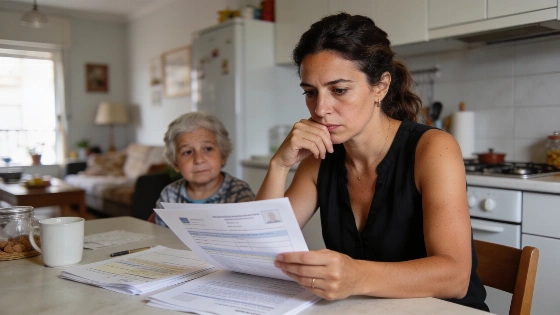
Spanish workers can now count up to three years spent caring for family members as fully credited toward their state pension. The change, in effect since March 2023, aims to recognize unpaid care work—especially by women—and offers new security for those stepping away from their jobs to support relatives.
Taking time off work to care for a family member no longer means sacrificing your future pension in Spain. Under rules in force since March 2023, up to three years of unpaid leave for family care are now treated as fully credited periods by Social Security, directly impacting retirement, disability, and survivor benefits.
This shift addresses a longstanding gap in Spain’s labor system, where the burden of family care—often for children, elderly parents, or disabled relatives—has fallen disproportionately on women. In 2025 alone, more than 54,000 workers took leave for caregiving, with women accounting for over 83% of these cases, according to official data.
How the credited leave works
The change is anchored in Article 237 of the Ley General de la Seguridad Social. It states that the first three years of leave taken to care for a spouse, partner, or close relative unable to care for themselves are considered as if the worker had continued paying into the system. This credited time counts toward the minimum contribution period for a pension, helps set the regulatory base, and determines the percentage applied to the final pension amount.
Importantly, the credited base is not a flat minimum. Instead, it is calculated as the average of the worker’s actual contributions during the six months before starting the leave. If the worker has less than six months of contributions, the average is based on the available period. This ensures the credited time reflects the worker’s real earnings history.
Who qualifies and for how long
Spanish law allows up to two years of leave for family care under Article 46.3 of the Estatuto de los Trabajadores, covering spouses, partners, and relatives up to the second degree. Some collective agreements extend this to three years, and the new Social Security rule ensures all such periods—up to three years—are protected for pension purposes.
The person needing care must be unable to manage daily life due to age, accident, illness, or disability, and cannot be engaged in paid work. The leave can be taken in segments and is an individual right for each worker. If two employees at the same company request leave to care for the same person, the employer can only limit simultaneous absences for justified operational reasons, and must offer alternatives in writing.
Job security and rights during leave
All time spent on family care leave counts toward company seniority. Workers retain the right to participate in professional training, especially before returning to work. For the first year, the worker’s exact job is reserved; after that, the guarantee shifts to a similar role within the same professional group. In large families, this job reservation extends up to 15 or 18 months, depending on the category.
Legal protections against dismissal are also reinforced. Any termination during or after the leave can be declared void unless the employer proves a valid, unrelated cause. This applies to both objective and disciplinary dismissals.
It’s important to note that while the credited period boosts future benefits, it does not provide monthly payments during the leave itself. The recognition is a non-economic family benefit, preserving rights for later claims but not generating immediate income.
How to apply and ensure coverage
There is no single national form for requesting family care leave. Workers should submit a written request to their employer, specifying the relative, relationship, reason for care, and desired period. Supporting documents may be required to prove the family link and the dependent’s inability to self-care. Reviewing the relevant collective agreement is essential, as it may set additional conditions or extend the leave period.
Employers are responsible for notifying Social Security of the start and end of the leave within 15 days. Failure to do so can result in penalties. If a credited period is not reflected in a worker’s record, they can request recognition at any time, though retroactive financial effects may be limited by statutory deadlines.
For those unable to take full leave, Spanish law also allows for reduced working hours or flexible schedules to accommodate family care, each with its own rules for pay and pension contributions.
This reform marks a significant step in recognizing the value of unpaid care work in Spain’s social protection system. By ensuring that years spent supporting family do not penalize workers’ future security, the law aims to reduce gender gaps and offer practical support for those balancing employment and caregiving responsibilities.