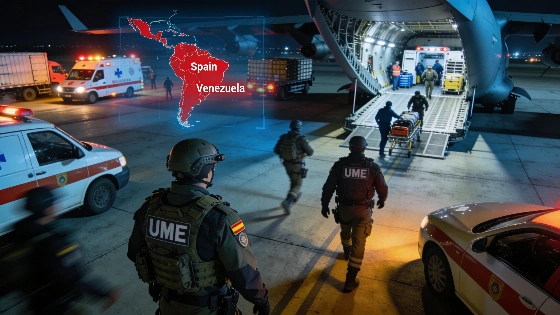
Spain has pledged emergency support to Venezuela after two severe earthquakes left dozens dead. The government is ready to send the UME and coordinate aid through Aecid. No Spanish nationals are reported among the victims.
Spain has moved swiftly to support Venezuela following two powerful earthquakes that struck the country overnight, resulting in at least 32 fatalities and more than 700 injuries. The Spanish government, led by Pedro Sánchez, has offered immediate emergency assistance and stands ready to deploy the Unidad Militar de Emergencias (UME) if required.
Pedro Sánchez expressed solidarity with the Venezuelan people, emphasizing that Spain's thoughts are with the victims and their families. The Spanish Royal Household also issued a message of support, highlighting the tragedy's impact and extending condolences to those affected by the disaster.
Diplomatic channels were activated early, with Foreign Minister José Manuel Albares contacting his Venezuelan counterpart, Yván Gil, to coordinate Spain's response. Albares confirmed that all available aid would be provided through the Agencia Española de Cooperación Internacional y Desarrollo (Aecid), and that the UME could be dispatched at the request of the Ministry of Defence. Further discussions between Albares and Gil are scheduled to finalize the details of the assistance package.
The Spanish Embassy and Consulate in Caracas remain fully operational, closely monitoring the situation of Spanish residents in Venezuela. According to the Ministry of Foreign Affairs, there is currently no evidence that any of the nearly 200,000 Spanish nationals living in Venezuela are among the dead or injured. Authorities have urged Spanish citizens in the country to follow official updates from the embassy and to use consular emergency contacts if needed.
Spain's rapid mobilization of resources reflects a broader pattern of international engagement in crisis situations. In recent years, Spanish authorities have prioritized the safety of their citizens abroad and have developed robust mechanisms for emergency response. The current situation in Venezuela has also drawn attention from the Spanish public, especially given the large expatriate community and the historical ties between the two countries. For context, international sporting events such as the upcoming Spain–Uruguay World Cup match in Mexico, which will be attended by Albares and King Felipe VI, often serve as reminders of Spain's global presence and its commitment to supporting citizens and partners worldwide. This approach is consistent with Spain's response to other international incidents, as seen in coverage of high-stakes events like the Ecuador–Curazao World Cup clash, detailed in this recent report.
Earthquakes are relatively rare in Venezuela, but when they occur, the consequences can be severe due to infrastructure vulnerabilities. Spain's offer of assistance through Aecid and the potential deployment of the UME underscore the country's readiness to provide both humanitarian and technical support in times of crisis. The Spanish government continues to coordinate closely with Venezuelan authorities to assess needs and deliver aid where it is most urgently required.