Spain’s long stretch of heat is about to end. Meteorologists say a cooling trend will start next week, finally bringing autumn weather after weeks of high temperatures.
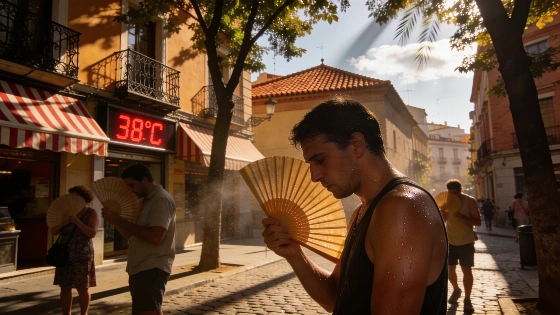
Spain’s heat streak is about to break. After weeks of summer-like weather, meteorologists say the country is finally heading for cooler days. This Friday, southern areas could still see 38ºC. Some northern cities will also feel the heat. But the record warmth is running out of time. The State Meteorological Agency (AEMET) says these temperatures are still well above normal for late September. Their forecast shows the heat isn’t over yet for many regions.
In Córdoba and Badajoz, Friday could still push close to 40ºC. Roberto Brasero reported this on ‘Antena 3’. But the forecast points to a change. Temperatures will stop rising. A slow cooling will start over the weekend. It won’t be a sudden drop. The change will be steady, starting in the far north and moving south. AEMET has kept yellow heat alerts in place for Andalusia, Extremadura, Galicia, and the Canary Islands. The late-season heatwave is still making itself felt.
In some northern cities, nighttime minimums are expected to remain around 25°C, meaning 'tropical nights' will persist even as the general cooling trend begins.
Most of Spain will stay sunny for now. Tropical nights and high daytime temperatures will continue to surprise. In Oviedo and Bilbao, nights will stay near 25ºC. Valencia, Albacete, Logroño, and Córdoba will see highs between 32ºC and 39ºC. By Saturday, the south and east will cool by 2ºC to 4ºC. A weak front will bring light rain to the Cantabrian coast on Sunday. Several independent weather reports say the biggest cooling will come from Sunday into Monday. The north and northwest will feel it first, as a front brings the first autumn rains.
AEMET is keeping yellow heat alerts for Friday. But the real story is autumn’s slow arrival. By Sunday, most of Spain will see daytime highs drop by 2ºC to 3ºC. The cooling will get stronger from Monday. Jorge Rey, using the traditional Cabañuelas method, agrees with this forecast. He says autumn is finally at the door. Media and weather bulletins also point to a bigger temperature drop in the first week of October. Some places could see highs below 30ºC for the first time in weeks.
The transition to autumn will not be abrupt, but rather a gradual process, with the most noticeable cooling starting in the northwest and moving southeast. Official and media sources agree that this is a transitional episode, not the definitive end of warm weather, as brief returns of higher temperatures may still occur later in autumn.
Looking ahead, the second week of October could bring a sharper drop in temperatures and the first real rains of the season. Warm Pacific waters and the El Niño effect have kept the east and north drier than usual. Autumn storms have been missing. But more humidity is expected from the west and south. That could mean a wetter winter. Jorge Rey predicts that between October 5 and 9, the heat will finally fade. Storms will move in from the west and quickly reach the Mediterranean. The Levante region will see unsettled weather at the start of the Puente del Pilar. The north will get cooler air and light rain.
This change won’t be permanent. Short bursts of summer-like warmth could still return later in autumn. But these will be rare. October looks set to be cooler and wetter than September. That’s a relief after a month with only three days of brief rain. This year’s weather has been unpredictable. But December could bring a much wetter winter if current trends continue.
Jorge Rey’s forecast points to a winter with frequent rain. He links this to the risk of strong DANAS—isolated high-altitude depressions—after the intense summer heat. AEMET has not yet released its official winter forecast. Rey’s early analysis suggests December to February could be especially wet. The timing of spring’s arrival is still unclear.
For those watching Spain’s wild weather, this shift echoes the recent change that brought rain and cooler air to the north. Now, the rest of Spain is set to follow. The last burst of summer heat is fading. Autumn is finally moving in. The signs are clear. Spain’s climate is changing, and the next few weeks will show how ready the country is for what comes next.