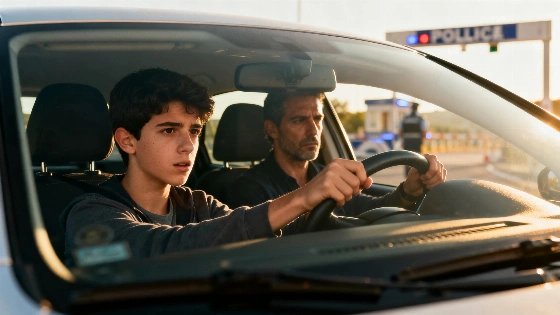
Spanish authorities are preparing to lower the minimum age for a class B driving licence to 17, following a new EU directive. Young drivers will need to be accompanied by an experienced adult until they turn 18.
Seventeen-year-olds in Spain will soon be able to obtain a class B driving licence, but with a crucial restriction: they must be accompanied by an adult supervisor until they reach 18. This change comes as the Dirección General de Tráfico (DGT) moves to align Spanish law with a recent European Union directive, which sets out new standards for young drivers across member states.
The reform, approved at the EU level, requires Spain to implement the new rules by November 26, 2028. Under the updated system, teenagers can take both the theoretical and practical driving exams at 17, just as adult candidates do. However, passing the tests does not grant full independence behind the wheel. Instead, successful candidates will be allowed to drive only if an eligible adult is present in the vehicle.
Supervision Requirements
The adult accompanying a 17-year-old driver must meet strict criteria. Supervisors must be at least 24 years old and have held a class B licence for a minimum of five years. They must also have a clean driving record, with no licence suspensions in recent years, and must strictly adhere to road safety laws, especially those concerning alcohol and drug use. The DGT sees this supervisory role as a way to improve road safety during the critical first months of driving experience.
No Changes to Training or Exams
Despite the lower age threshold, the process for obtaining a licence remains unchanged. Driving schools will not need to alter their teaching methods, and the content and standards of the exams will stay the same. The only difference is that, after passing, 17-year-olds will be required to drive with a qualified adult until they turn 18. This approach is already in place in countries like Germany and is seen as a way to help young drivers gain practical experience in real-world conditions.
Why the Change Matters
Allowing supervised driving at 17 could be especially significant for teenagers in rural areas or those who need to travel for education. By gaining experience before driving alone, young people may be better prepared for the responsibilities of independent driving. According to Montserrat Pérez, the DGT’s Deputy Director for Training and Road Safety Education, the new system is designed to provide closer oversight during the most vulnerable stage of a young driver’s development.
As Spain prepares to implement these changes, the focus remains on balancing earlier access to driving with robust safety measures. The reform reflects a broader European trend toward harmonizing road safety standards and adapting to the needs of younger generations.