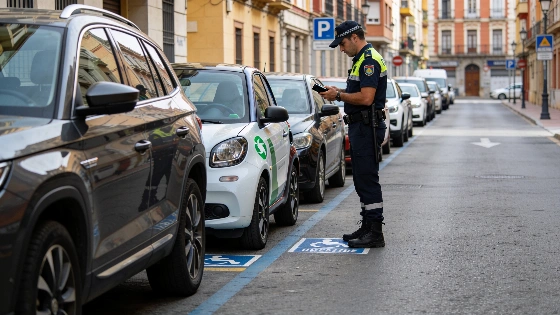
Starting in October, Spanish cities will adjust parking fees based on vehicle size and emissions. Local councils will be able to charge more for bigger or more polluting cars, aiming to free up space and encourage cleaner transport.
Drivers of SUVs, vans, and older cars in Spain will soon pay higher parking fees as local councils prepare to overhaul how parking charges are set. The new system, scheduled to begin on 1 October 2026 under Real Decreto 518/2026, was approved by the Spanish Council of Ministers on 24 June 2026. Instead of a flat rate, fees will depend on both the size and environmental rating of each vehicle.
According to the decree and the DGT, municipalities can now set higher fees for vehicles that take up more space or pollute more. For example, a compact electric car could pay much less for the same spot than a diesel SUV. The goal is to reduce congestion, improve air quality, and make public space more accessible. However, official sources have not yet independently confirmed that these differentiated tariffs for SUVs and older vehicles will definitely start on 1 October 2026. This detail should be checked directly with the BOE or DGT before treating it as confirmed.
The Real Decreto 518/2026 introduces a new legal distinction between parking and camping for motorhomes: if a vehicle does not exceed its dimensions, stands only on its tires, and does not discharge fluids, it is considered parked; the use of awnings, tables, or supports is classified as camping.
The DGT’s environmental labels—CERO, ECO, C, and B—will continue to determine parking costs. Cleaner vehicles will pay less, while those with higher emissions or larger size will pay more. Councils can also set stricter time limits and use new monitoring tools to keep parking spaces turning over, especially targeting long-term parking by large vehicles. These changes are part of a wider push to modernize urban mobility and protect vulnerable road users.
The reforms go beyond parking. The same decree brings several changes to urban mobility across Spain. Electric scooter riders will have to wear helmets, be at least 15 years old, and use lights and reflective vests at night. Fines for breaking these rules can reach €200. The previous exemption from seatbelt use for taxi drivers, driving instructors, and delivery workers has also been removed.
Cyclists will get new protections: in cities, drivers must keep at least five metres behind a bicycle, and on highways, overtaking now requires a full lane change. These steps are meant to make streets safer for cyclists and reduce serious accidents.
The reform, approved by the Spanish Council of Ministers on 24 June 2026, is not limited to parking fees but also updates traffic rules to enhance the safety of vulnerable road users, such as cyclists and pedestrians. The new regulations will come into force on 1 October 2026 and include mandatory helmet use for electric scooter riders and the removal of previous seatbelt exemptions for certain professional drivers.
According to the DGT and independent Spanish media, these reforms show a clear intent by Spanish authorities to reclaim public space from private vehicles and speed up the shift to sustainable transport. By tying parking fees to vehicle impact, councils are signaling that cheap, unlimited parking for large polluting cars is coming to an end.
For drivers, the changes are straightforward. Owners of smaller, cleaner vehicles will save money, while those with bigger or older cars will have a new reason to reconsider their options. The policy’s success will depend on how well it is enforced and accepted by the public, but the direction is clear: Spanish cities are moving to put people, air quality, and efficient use of space ahead of oversized cars.