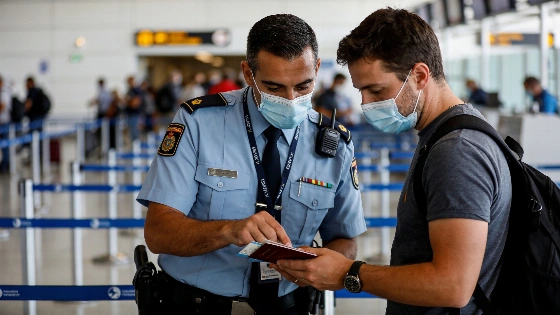
Spain has issued an ultimatum to Italy, demanding the removal of border checks for Spanish travellers. If Rome does not comply by Sunday, Madrid will impose reciprocal measures. The dispute follows Italy's suspension of Schengen rules.
The Spanish government has sharply escalated its response to Italy’s decision to impose border controls on travellers arriving from Spain, warning that reciprocal restrictions will be introduced if Rome does not reverse course by Sunday. The move comes after Italy, led by Giorgia Meloni, last week reinstated checks for Spanish arrivals, citing a surge in irregular migration through Ceuta.
Madrid’s ultimatum marks a significant deterioration in relations between the two countries. In a statement released Friday, the Spanish executive described Italy’s actions as unprecedented in recent history, taken unilaterally and without prior notice. The government argued that the justification provided by Rome—alleging mass entry of migrants into Ceuta—does not align with the facts or with Schengen border regulations. According to Spanish authorities, nearly all of the 72,000 people who entered Ceuta irregularly last week have already returned to Morocco, and Ceuta’s special status means these migrants cannot freely access the Schengen area.
Italy’s suspension of the Schengen Agreement on July 31 was officially described as an extraordinary measure to safeguard national security. Meloni’s government insisted the step was necessary to prevent potential risks to the country. However, Spain’s response has grown increasingly forceful. Foreign Minister José Manuel Albares summoned the Italian ambassador last week, and the government now accuses Italy of breaching both the spirit and the letter of European agreements. Madrid also points out that, according to Frontex, Italy has recorded the highest number of irregular border crossings among EU states in recent years, sometimes double those of Spain. Furthermore, Spain claims that since 2022, Italy has failed to comply with the Dublin Regulation, which determines responsibility for asylum applications, thereby increasing pressure on other member states.
Despite these tensions, Spain notes it has never imposed controls on Italian travellers, and has repeatedly shown solidarity, including by accepting migrants rescued in the central Mediterranean and those arriving in Lampedusa in 2023. Albares has publicly criticised Italy and other EU partners, such as Finland, for their handling of the migration crisis, recalling repeated emergencies on Lampedusa and highlighting Spain’s consistent support in both policy and practice.
Italian officials have defended their position. Foreign Minister Antonio Tajani, responding on social media, highlighted a 60% drop in irregular migration to Italy since 2023 and credited the EU’s migration pact as reflecting Italian priorities. He maintained that the Schengen suspension was correct, supported by 21 European countries, and in line with EU treaties. Interior Minister Matteo Piantedosi, after a meeting of EU interior ministers, sought to ease tensions by stressing that the temporary controls were not targeted at Spain but were a preventive measure for national and European security. He also expressed Italy’s solidarity with Spain.
However, these reassurances have not satisfied Madrid. The Spanish government insists that unless Italy lifts the restrictions by the end of Sunday, August 9, it will introduce proportional measures to defend the interests and dignity of Spanish citizens. The dispute has practical implications for millions: last year, over 11 million people travelled from Italy to Spain by air, according to Aena data. The standoff also raises questions about the future of free movement within the EU, especially as border controls and migration remain contentious issues across the continent.
Recent weeks have seen a series of disruptions affecting travel and daily life in Spain, from diplomatic tensions to severe weather events. For example, a recent hailstorm in Valencia caused significant damage to crops and infrastructure, highlighting the range of challenges currently facing the country. As the deadline for Italy’s decision approaches, attention remains focused on whether the two governments can avoid further escalation and restore normal travel conditions for their citizens.
Spain and Italy are both key members of the Schengen Area, which allows passport-free travel across much of Europe. Temporary suspensions of Schengen rules are permitted in exceptional circumstances, but such measures are rare and often controversial. The outcome of this dispute may set a precedent for how EU states handle migration pressures and border management in the future.