Spain’s top anti-drug prosecutor has instructed police to document violent incidents involving narcolanchas in detail. The move aims to enable piracy charges, even for attacks in Spanish waters. This marks a shift in legal strategy.
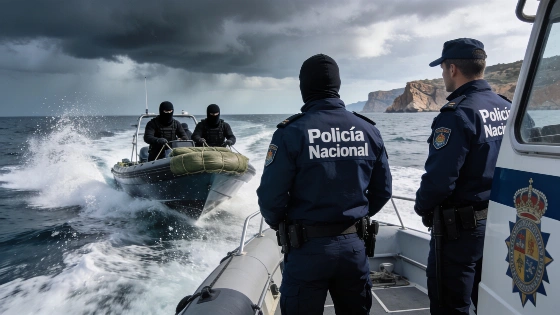
Spain’s chief anti-drug prosecutor, Rosa Ana Morán, has issued a directive to the Guardia Civil and Policía Nacional, calling for meticulous documentation of violent acts committed by crews of narcolanchas—high-speed boats often used for drug trafficking. The instruction, sent to law enforcement across the country, specifically asks officers to record every instance of violence, intimidation, or direct and indirect attacks by these vessels, regardless of whether the incidents occur in international or Spanish territorial waters.
This move signals a significant change in legal approach. Until now, piracy charges were rarely considered for crimes committed within Spanish waters. However, Morán points to a recent Supreme Court ruling that opens the door for such prosecutions, arguing that the legal definition of piracy in Spain is broad enough to cover violent acts at sea, even when they take place under national jurisdiction.
The prosecutor’s guidance emphasizes the importance of including comprehensive details in police reports—such as photographs, video recordings, and any other available evidence—when narcolancha crews attack official vessels or personnel. This level of detail, Morán notes, is crucial for the Fiscalía Antidroga to assess whether there are grounds to file piracy charges alongside other offenses, particularly when the violence targets members of Spain’s security forces or customs surveillance teams attempting to prevent drug trafficking.
Morán’s instruction clarifies that the Spanish Penal Code, amended in 2010, was designed to address illicit acts threatening maritime and aerial navigation, in line with international commitments. The prosecutor highlights that the protected legal interest is the safety of maritime navigation, and that piracy charges can apply not only to acts of terrorism at sea but also to any violent conduct that endangers navigation, regardless of financial motive.
The Fiscalía’s interpretation, now backed by the Supreme Court, allows for piracy charges in cases where narcolanchas or similar vessels are used to attack law enforcement or customs officials, even within Spanish waters. The Supreme Court has stated that any violent act against a vessel or its occupants at sea, if it seriously compromises maritime safety, may fall under the definition of piracy.
While the directive primarily addresses incidents in international waters, Morán argues that Spanish law does not restrict piracy charges to those areas. The legislation refers broadly to acts committed “at sea,” mirroring approaches in countries like Canada and Australia, which also extend maritime security protections to national waters. The prosecutor further notes that the placement of piracy offenses within the chapter on crimes against the international community should not limit their application, as the key factor is the protected legal interest, not the location of the crime.
This new strategy comes amid a rise in violent confrontations involving narcolanchas, both in international and Spanish waters. Attacks against law enforcement and customs officials have become more frequent and severe in recent years, with high-speed boats increasingly used to evade capture and transport drugs. Authorities argue that existing punitive measures have not been sufficient to deter these dangerous activities, which threaten both maritime safety and the lives of those involved in enforcement operations.
Spain’s evolving legal tactics against maritime drug trafficking reflect broader efforts to address complex security challenges. The issue of organized crime and its impact on public safety has also surfaced in other areas of Spanish politics, as seen when new political platforms emerge to address local security concerns—such as the recent launch of Independientes por Madrid, which aims to reshape the city’s political landscape and was covered in detail in our report on Madrid’s shifting political scene.
For context, narcolanchas are typically semi-rigid, high-powered boats capable of carrying large quantities of drugs at high speed. Their use has posed a persistent challenge for Spanish authorities, particularly along the southern coast and in the Strait of Gibraltar. The new prosecutorial guidance is expected to influence how law enforcement collects evidence and pursues charges, potentially leading to more severe penalties for those involved in violent maritime drug trafficking operations. As Spain continues to adapt its legal framework, the effectiveness of these measures will likely be closely watched by both national and international observers concerned with maritime security and organized crime.