Horse Powertrain's B20 engine, developed in Spain, can keep running even when the vehicle is submerged over a meter underwater. Already powering hybrid SUVs in China, the B20 sets a new standard for durability and efficiency.
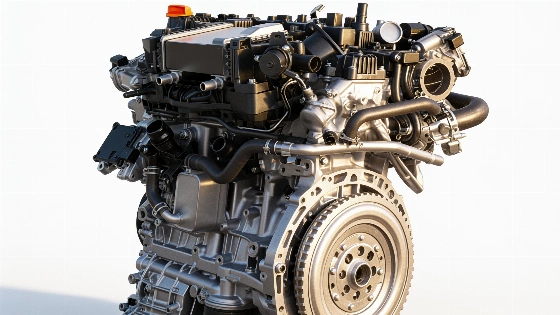
Horse Powertrain has introduced the B20 engine, built in Valladolid and Sevilla, with a feature rarely seen outside of military vehicles: it keeps running even when the car is submerged in water up to 1.1 meters deep. This isn't a concept or a future promise—the B20 is already in use, powering the Geely Galaxy Cruiser 700, a hybrid SUV now on sale in China.
For anyone who deals with flooded roads or likes to take their SUV off-road and across rivers, the B20 changes the usual rules. Most combustion engines stall or get damaged if water gets in. Horse Powertrain—a joint venture between Renault and Geely—set out to fix that. The B20 has an IPX8 water protection rating, sealed electronics, and a special transmission interface, so it can keep running where most engines would fail. Dieselnet and other industry sources confirm the engine is certified to work at depths up to 1.1 meters, and several automotive publications have independently verified this.
Dieselnet
The B20 is a 2.0-liter inline-four designed for hybrid and plug-in hybrid vehicles, as well as electric cars with range extenders. Depending on the setup, it produces between 188 and 248 horsepower, with torque from 221 to 280 lb-ft, according to CarBuzz and WardsAuto. It weighs just 130 kilograms (about 286 pounds), lighter than many engines in its class. But its main selling point is how it handles tough conditions, not just its specs.
If the engine's sensors detect it's underwater, the management system automatically changes throttle response and limits power to protect the engine. This lets a properly equipped SUV cross a river without risking a breakdown. The B20 can also handle a 45-degree incline—a 100% gradient—which is rare even among off-road vehicles. Its waterproofing relies on sealed electronics and a specialized transmission interface, as noted by Autoblog and Electric & Hybrid Vehicle Technology.
Efficiency is another area where the B20 stands out. It uses the Miller cycle, direct fuel injection, custom pistons, and high-turbulence intake channels to reach a thermal efficiency of 48.4%. For comparison, most combustion engines don't get past 30%, and even the Toyota Prius's Miller-cycle engine tops out around 40%. The B20 also has a dual active cooling system to keep temperatures steady during long climbs or heavy loads.
Motor1 Brasil
Unlike many new technologies that stay in concept cars, the B20 is already in production. It debuted at the Beijing Auto Show earlier this year and is aimed at markets where floods and rough terrain are common. The engine is paired with a three-speed hybrid transmission from Horse Powertrain, and its launch in the Geely Galaxy Cruiser 700 suggests Renault models could be next. WardsAuto also reports that Horse Powertrain has opened its first US office in Detroit.
Spain's role is central here. With manufacturing in Valladolid and Sevilla, Horse Powertrain is putting Spanish engineering at the center of a push for tougher, more resilient vehicles. The timing matters, as companies like Amazon are also moving quickly to adopt new vehicle technologies, such as the recent rollout of electric trucks in Germany.
The B20 stands out because it's not just a technical achievement—it's ready for real-world use. While electric vehicles get attention for their environmental benefits, the B20 tackles a different problem: keeping vehicles running during floods, storms, and off-road challenges. As climate events become more unpredictable, the need for vehicles that can handle tough conditions is growing. The B20 is already being adopted in China, and its success is likely to push European automakers to respond. Spanish factories are now a key part of this shift toward more resilient vehicles.