A major study finds Spanish children and teens mostly drink water and milk, not sodas. Cocoa-flavored milk is popular, but sugary drinks remain rare. The findings highlight key trends in school hydration.
Spanish children and teenagers may be drifting from the traditional Mediterranean diet, but their drink choices tell a different story. A large study from the Universidad Autónoma de Madrid (UPM) shows that water and milk—especially cocoa-flavored milk—are the top picks for young people, while sodas and energy drinks are rarely chosen.
The research, published in the Journal of Physiology and Biochemistry, looked at the drinking habits of 1,000 students aged 6 to 17 across Spain. Even with heavy marketing of unhealthy products and a growing taste for ultra-processed foods, most kids still reach for water first. Water makes up 60.4% of all drinks reported, far ahead of the 36 other options named by participants. UNICEF notes that Spain, like other Mediterranean countries, has put policies in place—such as taxes on sugary drinks and clearer labeling—to help reduce sugar intake among children.
"In Galicia, energy drinks are already banned for those under 18, reflecting a tightening of local measures in response to concerns about sugary and caffeinated beverages among minors."
El País
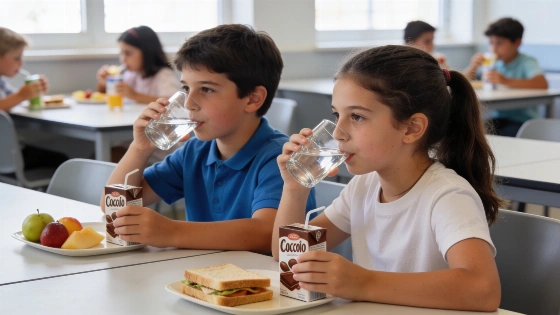
Milk is the next most common drink, but most children prefer it with cocoa powder, which adds sugar and calories. The study found that 9.5% of drinks were whole milk with cocoa, compared to 5.3% for plain whole milk. Semi-skimmed milk with cocoa (3%) was also more popular than its unsweetened version (2.6%). Researchers point out that while soda is rare, sweetened milk drinks are still a major source of sugar. Other studies across Europe, including Spain, have found that family habits and the wider food environment play a big role in what children eat and drink.
Other dairy drinks, like milkshakes (2.4%) and liquid yogurt (1.7%), also make the top ten. Natural orange juice (1.5%), mixed fruit juice (1.55%), and pineapple juice (1.39%) round out the list. Together, these ten drinks account for 91% of all beverages reported by Spanish minors.
Eating at school doesn't change these habits much. Children who eat lunch at school show nearly the same pattern, with water (59.3%) and cocoa milk (10%) leading. This group drinks more fermented milk with lactobacillus (1.37%) than orange juice, showing small differences in school settings.
"The European Food Safety Authority (EFSA) continues to closely monitor the safety of sweeteners and their mixtures in the EU, including aspartame and aspartame-acesulfame, reflecting ongoing regulatory attention to the composition of beverages consumed by children and adolescents."
EFSA
What stands out is what’s missing: sodas, sports drinks, and energy drinks barely appear in the main list. These drinks make up the remaining 10% of less common choices, which the study authors say could be more responsive to targeted policies. This is a shift from earlier findings, such as a 2021 report from the GENUD group at the University of Zaragoza, which found that 40% of children and 50% of teens drank at least 250 ml of sugary drinks daily. The new data suggest that, at least in this sample, habits are changing.
Still, the study points to ongoing problems. In vulnerable communities, the Fundación Gasol found that 14.5% of children aged 8 to 12 do not drink water every day, while 19% have sugary drinks daily. Over a week, 91% of these children have sugary drinks and 17.2% try energy drinks. These patterns are closely linked to higher rates of childhood obesity, especially in families with fewer resources.
The European Food Safety Authority (EFSA) recommends daily water intake of 1.6 liters for ages 4 to 8, 1.9 to 2.1 liters for ages 9 to 13, and up to 2.5 liters for those over 14. The study confirms that Spanish children and teens are meeting these hydration targets, which the authors see as important for both immediate health and building good habits for the future.
With more than 90% of drinks coming from just ten options, the study points to a stable set of hydration habits. This makes it easier to design effective education campaigns, especially in schools, where access to good information and healthy choices can shape habits early on. The authors note that helping children make daily decisions about what to drink is just as important as setting general guidelines.
Earlier studies have shown that policies like raising taxes on sugary drinks or banning them from schools can change what children drink. But the current data suggest that Spanish youth are already making healthier choices than many expect. The main challenge now is reaching vulnerable groups and making sure these positive trends extend to all children, no matter their background. While the Mediterranean diet may be less common, Spanish children are still getting hydration right where it counts.