The sixth Día del cine español brings Jaime Chávarri's El desencanto to more than fifty cities. Rural screenings and a guionista tribute widen the celebration beyond Madrid.
On 6 October, Spain's cinema celebration will reach more than fifty cities across five continents. Jaime Chávarri's 'El desencanto' leads the international programme, while the national schedule brings Spanish films to municipalities with limited access to screenings.
The sixth Día del cine español puts guionistas at the centre of its public debate. The ICAA, attached to the Secretaría de Estado de Cultura, organises the event. Created in 2021, the celebration recognises Spanish cinema's influence at home and abroad.
The date connects the event to 'Esa pareja feliz', directed and written by Juan Antonio Bardem and Luis García Berlanga. Fernando Fernán Gómez and Elvira Quintillá star in the film, which was completed on 6 October.
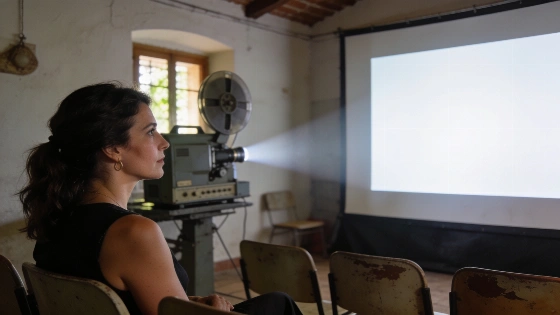
At Madrid's Cines Doré, 'Esa pareja feliz' will screen continuously at 17.00, 18.25, 19.50 and 21.15. The anniversary begins there, before the wider programme reaches international audiences.
The Instituto Cervantes is organising the largest overseas screening network. 'El desencanto' will screen in Cracovia, Dublín, Leeds, Albuquerque, Los Ángeles, Nueva York, Pekín, Shanghái, Tetuán and Sídney. Jaime Chávarri will travel to Praga to introduce the film. Guides and other materials will give audiences additional context.
Fifty years after its release, Chávarri's 'El desencanto' still examines memory and family relationships, as well as identity and the stories people create about themselves. His work engages with reality and tells its story with unusual freedom. The ICAA sees room for new readings as a reason to show the film to audiences across countries and generations.
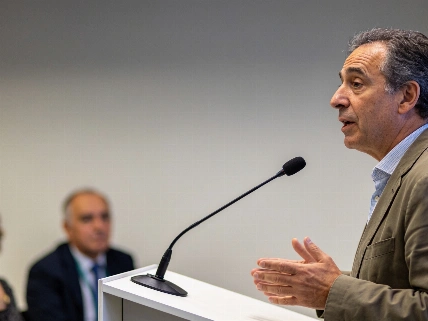
Authorship is the programme's other basic focus. Filmoteca Española will host the round table 'La libertad creativa del guionista' at the Doré, under the hashtag #GuionDondeEmpiezaTodo. Rodolf Giner, Josep Gatell and Jorge Sánchez-Cabezudo will take part, alongside Marina Parés, Tina Olivares and Ana Hormaetxea. Their careers will inform a discussion of audiovisual writing and creative freedom, as well as authorship and the profession's working conditions today.
The discussion gives the celebration a clear industry focus. It casts the guionista as more than an unseen figure behind production: the writer is where the work begins. The programme also connects with coverage of Spanish cinema at the San Sebastián festival, where international attention has coincided with questions about recognition. That coverage appears in San Sebastián coverage.
Inside Spain, organisers are taking the programme beyond the largest cultural centres. Six special presentations will run between October and November, with three male and three female directors meeting local audiences. Enrique Buleo will present 'Bodegón con fantasmas' in Quintanar del Rey on 15 October. Telmo Iragorri will show 'Traineras, pasión por el remo' in Artziniega on 18 October, and Fany de la Chica will bring 'Tiempo entre olivos' to Filmoteca de Granada on 28 October.
The remaining stops feature Gala Gracia, presenting her first feature, 'Lo que queda de ti', in Arenas de San Pedro on 6 November, and Alberto Morais, showing 'La terra negra' in Garganta de los Montes on 7 November. Eduard Costa and Sònia Armengol will introduce 'Dones Muntanya' in Amer on 11 November.
Rural audiences are also included through 'Cine Vecino', presented in May to bring independent cinema to rural areas. PLATFO Filmoteca Española's platform, created a year ago, remains in beta. It is expected to open its historical film archive to the public. The national programme pairs in-person screenings with access to preserved material.
Two more screenings add historical depth. 'Canciones para después de una guerra' by Basilio Martín Patino will screen simultaneously in Madrid, Málaga and Santander. The film rebuilds post-war memory through archive material and NO-DO images, alongside photographs, popular songs and radio recordings. Censorship kept it banned until its release in 1976. Filmoteca Española will also present the restored 'Angustia' (1947), directed by Jose Antonio Nieves Conde.
Spanish cinema is being presented as a living archive that must travel, not as an annual ceremony confined to Madrid. 'El desencanto' anchors the international programme, while rural screenings and the guionista debate bring the work closer to audiences and professionals. The sixth Día del cine español combines preservation and access with direct encounters, extending the programme beyond premieres and red carpets.