From October 2026, Spanish municipalities can set parking fees based on car size and environmental rating. There is no automatic price hike for SUVs, but local councils may choose to charge more for larger or more polluting vehicles.
Starting in October 2026, Spanish city councils will have a new tool. They can set parking fees based on how big your car is and how much it pollutes. This change comes from a national regulation, but it does not force any city to raise prices for big cars. The choice is local. Some drivers may pay more. Others may see no change at all.
The updated Reglamento General de Circulación, under Real Decreto 518/2026, gives each municipality the right to decide. The law says councils "may" set different parking rates by vehicle size and emissions. There is no national price list. No fixed rules. No city is required to change its current system. Each council must pass its own ordinance if it wants to use these new powers. Spanish media, citing the official BOE, confirm that local governments get the right—but not the duty—to set these fees. Every city will make its own call.
Barcelona has publicly stated that, for now, it does not plan to apply higher parking fees based on vehicle size in its blue and green zones.
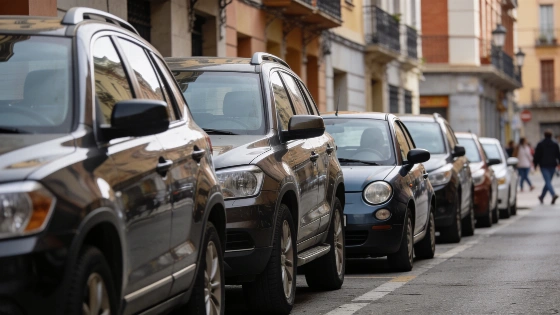
For drivers, everything depends on where you park. In one city, a five-meter SUV could pay the same as a tiny hatchback. In another, that same SUV might land in a higher price bracket. Compact cars or those with "ECO" labels could get discounts. The law does not say what counts as "large" or "small." It does not list which environmental stickers trigger a discount or a surcharge. Local ordinances will decide. El Correo reports that some cities already give discounts to cars with "0" or "ECO" stickers. The new rule just extends this idea.
Councils can now look at two things: how much space a car takes up, and its emissions. A big car with a "Cero" sticker could get a break. A diesel van of the same size might pay more. Cities can also factor in parking zones, time limits, and hours. The Spanish Federation of Municipalities (Fedma), quoting the DGT, says the reform starts on 1 October 2026. Each city will decide if and how to use the new model.
No one gets an automatic penalty for owning a large SUV or van. On 1 October 2026, parking costs will not jump overnight. Only if a city council passes a new rule will anything change. This could create a patchwork. The same car might pay very different fees in different cities.
The regulation does not set any mandatory national price increases or define what constitutes a 'large' or 'small' vehicle; all criteria and rates are left entirely to the discretion of each municipality, which may also combine size, emissions, parking zone, and time factors in their local ordinances.
The timing is not random. SUVs and other big vehicles now fill more of Spain's streets. Many barely fit in old parking spaces. The new rule gives cities a way to deal with this. But it does not force a single solution. Drivers will need to watch what their local council decides as 2026 gets closer.
The Spanish car market is already changing. Electric and hybrid cars are more common now. As reported earlier, electric vehicles are shaking up sales rankings and city policies.
These new parking rules point to a future of local control. The state sets the stage. Cities write the script. For now, there is no blanket fee hike for SUV owners. But in some places, size and emissions could soon mean a bigger bill. Cities get flexibility. Drivers get uncertainty. Watch your local rules. They could cost you—or save you money—depending on what you drive.