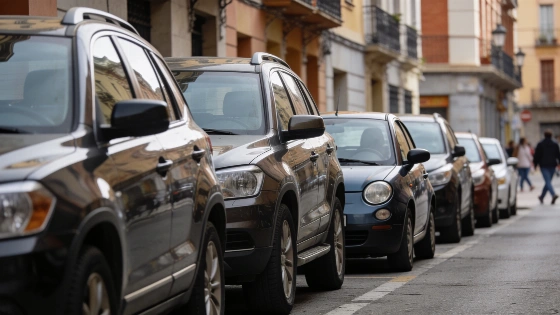
A new Spanish decree allows city councils to charge higher street parking fees for larger vehicles. The move aims to improve urban mobility and safety by discouraging oversized cars and giving more space to pedestrians.
Drivers with big cars in Spanish cities face a new reality. Starting October 1, 2026, Real Decreto 518/2026 gives local councils the right to set higher street parking fees for larger vehicles. The law is now in force. But that does not mean prices will jump overnight. Each city must decide for itself. Officials have clarified that the regulation only gives councils the option to consider vehicle size and environmental class. Actual rates will depend on local ordinances.
This is a sharp turn from the old way of planning cities. For years, cars ruled the streets. Now, lawmakers want to put people first. The new decree changes Spain’s Reglamento General de Circulación. It reflects a push for cities that are healthier and easier to live in. There are no national rules for what counts as a "large vehicle." The law does not create a special SUV category or set a size threshold. It does not force any city to add a surcharge for length, width, or space used. Each city will set its own rules and prices.
In Bilbao, a practical model already exists: vehicles with 0 and ECO environmental labels receive a 50% discount on OTA parking for the first two hours, while cars of classes C, B, and those without an environmental label pay the standard rate.
The main tool is simple: pricing. Article 156 of the decree says, “El estacionamiento de los vehículos podrá ser objeto de tarificación por los Ayuntamientos en función de sus dimensiones y clasificación ambiental.” In plain language, city halls can now legally charge more to park a big car than a small one. They can also factor in environmental class. The new legal framework sets out these two criteria—size and environmental label—as the basis for any future parking fee changes.
The timing is not random. ANFAC data shows that large SUVs made up 25.9% of all car sales in Spain from January to August. These vehicles are taller and heavier. They pose a bigger risk to pedestrians in a crash. Supporters of the decree say higher parking costs could push drivers to choose smaller, safer cars that take up less space. The Spanish Federation of Municipalities (Fedma) points out that families with several children often need bigger vehicles for daily life. They want cities to keep this in mind.
No city is forced to act. The law only gives councils the green light to use size-based parking fees if they want. Many cities already set parking prices by emissions label or car age. This is the first time size is a legal factor. It is not clear yet if any city will use the new pricing model. That is still up in the air.
The reform also allows municipalities to introduce full or partial restrictions on the movement of certain categories of vehicles in low-emission zones, residential priority areas, and other roads under local jurisdiction. Notably, Barcelona's city government has stated that it does not plan to calculate blue and green zone parking fees based on vehicle size during the current mandate, indicating that application of the new powers will not be universal across Spain.
This move puts Spain in line with a wider European debate about big cars in cities. As previously reported, a car’s environmental impact is not just about age. Now, size is under the spotlight too.
For drivers, the message is blunt. Owning a large car in the city could soon cost more to park. For city planners and residents, the decree offers a new way to reclaim public space and put safety first. The real question is whether local governments will use this power or let it sit unused. Oversized vehicles are on the rise in Spain. The pressure to act is not going away.