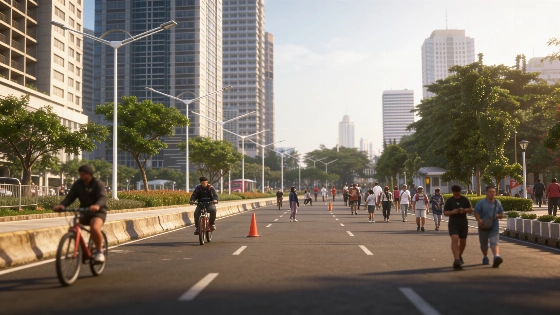
On September 22, major Spanish cities will block car traffic in central areas and offer free bus rides for Car Free Day. The event highlights a shift toward more accessible urban transport and brings temporary changes to daily routines.
On September 22, central streets in cities like Valladolid, Cartagena, and Mieres will be closed to cars as Spain marks Car Free Day. For one day, buses are free, bikes are easier to access, and private vehicles are kept out of key areas. The event is part of European Mobility Week 2026, which runs from September 16 to 22 and includes more than 2,500 cities across Europe, according to the European Commission.
This is a temporary change, not a permanent overhaul. Car Free Day is the final event of the Semana Europea de la Movilidad 2026. The European Commission chose the theme ‘Movilidad para todas las personas’ for this year, focusing on making transport accessible for everyone—children, seniors, and people with reduced mobility. Spanish regional and city officials have echoed this focus on equity and inclusion in their own announcements.
In Valencia, all EMT city buses will be free for the entire day on September 22, as part of the city’s commitment to Car Free Day during European Mobility Week 2026.
Each city sets its own rules. Valladolid will make all AUVASA buses and the first 30 minutes of BIKI bike rentals free, and will limit its low-emission zone to authorized vehicles from 10:00 to 22:00. Mieres will close Manuel Llaneza street to traffic and offer free EMUTSA bus rides. Cartagena will suspend fares on all public transport for the day. There is no national mandate—outside the restricted zones, the impact is mostly symbolic. Local governments decide the details, as confirmed by official municipal statements.
The week’s events are aimed at people who are often left out of car-focused city planning. In Cartagena, the ‘Yayacleta’ project invites older residents to try cycling and connect with others. Valladolid’s ‘Mayores sobre ruedas’ brings day center users onto public bikes. San Sebastián de los Reyes is organizing a seven-kilometer walk for seniors and road safety lessons for children. Donostia’s program includes a neighborhood competition through the Wellk app, a ‘En bici con estilo’ photo contest, and an exhibition of electric and historic Dbus buses. These activities reflect the campaign’s focus on making transport more inclusive and sustainable, a point highlighted by Spanish transport groups like CONFEBUS, which links the week to the role of buses in accessible mobility.
These events are more than just road closures. Cities are using them to test what life could look like with fewer private cars. The trend is growing: last year, over 2,700 European cities took part, and more Spanish towns are adding free transport and traffic bans to their plans. Cartagena has been recognized by the Ministry for the Ecological Transition for its ‘CartaGO!’ bike rental service, showing a steady commitment to sustainable mobility.
In 2026, Spanish cities such as Alicante, Zaragoza, and Valencia are each running their own series of events and mobility initiatives during European Mobility Week, confirming that the campaign is implemented locally rather than as a single national program. Activities include open days, pedestrian routes, family events, and educational campaigns, all designed to promote sustainable and accessible transport.
For most drivers, unless you need to cross a restricted city center, your day will likely be unchanged. But for people living or working in the affected areas, the day offers a rare look at city life without cars. As reported earlier, Spain’s aging vehicle fleet is a major source of pollution, so these experiments are more than just symbolic.
The measures are temporary and vary by city, but the direction is clear. Cities like Valladolid, Mieres, and Donostia are not waiting for national rules—they are using Car Free Day to try new ideas and shift priorities. With more cities joining in, accessible and sustainable mobility is becoming a central issue for Spanish urban policy.