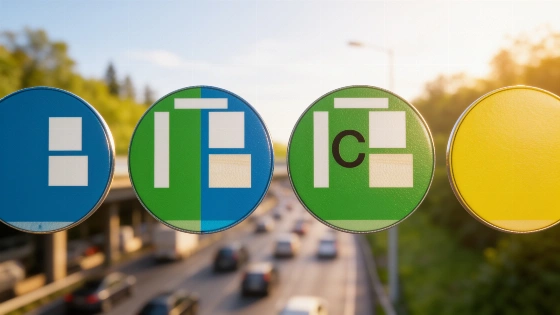
After phasing out older and B label cars, Spanish cities are now weighing new restrictions for C label vehicles. With EU air quality deadlines approaching, drivers in Madrid and Barcelona may soon face even tighter limits.
Spanish cities are preparing to extend emission restrictions to C label cars, marking a shift from targeting only the oldest or most polluting vehicles. Now, even relatively recent models could soon be barred from city centers.
The driving force behind this change is the European Union’s Next Generation funding, which ties financial support to decarbonization and requires regular air quality reviews. The first major assessment is scheduled for 2027. Cities that fail to meet EU standards will have to introduce stricter measures or risk sanctions. According to regional Spanish media and official city statements from September 2026, several municipalities are already planning a phased approach: first restricting cars without environmental labels, then B label vehicles, and eventually C label cars between 2027 and 2030, as confirmed by independent sources.
In Soria, the low emission zone (ZBE) entered its implementation phase on September 16, 2026, with an initial information period before fines are introduced. Cars with B, C, ECO, and Cero labels can currently enter freely, while non-labeled vehicles face stricter limits.
Like most EU countries, Spain has focused its efforts on restricting cars rather than addressing all sources of urban pollution. In cities with more than 50,000 residents, an increasing number of vehicles are being excluded from circulation. National law requires all such cities to implement low emission zones (ZBE), laying the groundwork for further local bans and enforcement, as detailed in government documents and sectoral reviews.
Madrid and Barcelona have already limited access for vehicles without an environmental label and those with a B label. Now, extending these restrictions to C label cars is under discussion. In Madrid, for instance, C label vehicles are only allowed in certain areas if they park in designated garages. The next step could see both B and C label cars excluded entirely from key urban zones. Sectoral analysis and local government communications indicate that expanding restrictions to C label vehicles is viewed as a logical continuation of current regulations, not a new initiative.
This trend is spreading. As previously reported, more Spanish cities are tightening low emission zones, affecting millions of vehicles through a patchwork of local rules.
In Catalonia and several municipalities, there is already a precedent for stricter rules: from 2028, B label vehicles will face new restrictions, with further pressure on C label cars expected in subsequent years. However, the timeline and severity of these measures vary significantly between cities, and there is currently no unified national date for a C label ban.
The focus on private cars stands out, as other major sources of urban pollution—such as heating systems and public transport emissions—remain largely unregulated. The EU’s periodic reviews will become more demanding, raising compliance standards every five years and increasing pressure on city authorities. An audit in Aragon found that many municipalities are behind in fully implementing their ZBE obligations, with delays in enforcement and the deployment of monitoring systems like cameras and fines.
For Spanish drivers, the message is clear: owning a C label car no longer ensures access to city life. The regulatory landscape is changing, and the next wave of bans could arrive sooner than expected. While these measures may help cities avoid EU penalties, they also point to a future where mobility is shaped by environmental policy rather than just vehicle age or efficiency. The real question is whether these restrictions will lead to cleaner air or simply shift the burden onto ordinary citizens while leaving other polluters largely unaffected.