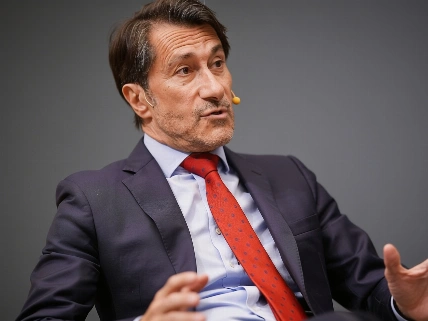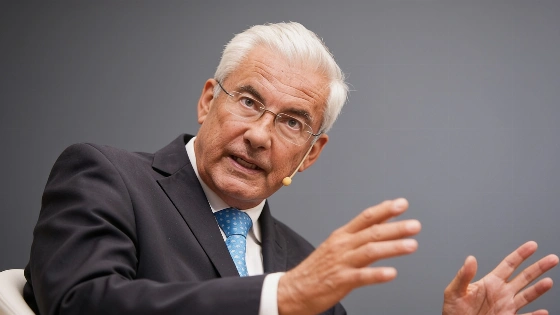
Jaime Rodríguez-Arana, professor of administrative law, says Spain’s healthcare system needs to put people before paperwork. He warns that bureaucracy and old habits are holding back patient care, and urges open data and real quality checks.
Jaime Rodríguez-Arana didn’t hold back when he closed out the third day of the VII Simposio del Observatorio de la Sanidad de EL ESPAÑOL-Invertia. The University of A Coruña professor took aim at a problem he sees every day: Spanish healthcare often puts the system ahead of the people it’s supposed to serve.
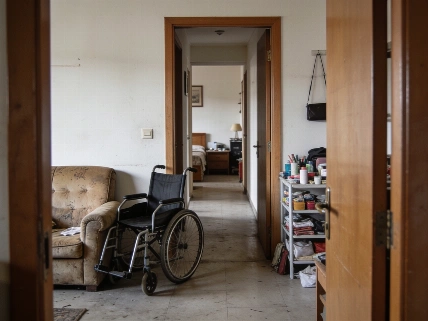
He painted a picture of patients lost in a maze of forms and red tape. Too many feel like just another number. Rodríguez-Arana argued that “buena administración” — good administration — should mean more than a line in the law books. “The citizen must feel that healthcare exists to serve them, not the reverse,” he said. In his view, that’s still a long way off in many hospitals and clinics.
By the end of 2025, 853,740 patients in Spain were waiting for scheduled surgery, with an average delay of 122 days, according to the Ministry of Health.
He pointed to a big problem: public offices keep asking for personal data they don’t really need. “The data is the person,” Rodríguez-Arana warned. He said handling sensitive information takes real training and a sense of duty. Too often, officials treat it like just another file, and people hand it over without thinking twice.
Rodríguez-Arana didn’t buy into the hype around artificial intelligence, either. He said algorithms can help with routine tasks, but warned against letting machines make calls where human judgment and democratic values matter. “AI is a tool, but it lacks the sensitivity for the most human and democratic issues,” he said. He called for open oversight and for the public to have a say in how healthcare algorithms are built and used.
For him, long waiting lists are a clear sign that the system has lost its way. He said the answer isn’t just technical fixes. What’s needed is a real change in attitude — from both those running the system and the people using it. Rodríguez-Arana urged citizens to stand up for their rights and push for a healthcare culture that puts their needs first.
The Spanish government is preparing a reform to waiting list management, aiming to count waiting time from the date of the medical decision and to prohibit parallel lists, with the goal of increasing transparency and focusing the system on the patient. The reform also proposes publishing statistics quarterly with monthly data, reflecting a broader push for accountability.
On the legal front, Rodríguez-Arana criticized the now-defunct Proyecto de Ley de Gestión Pública, which expired when general elections were called for November 29. He rejected the idea that the 1997 law clashes with public health, calling that a biased take. Instead, he pushed for management models built on quality and objectivity, not on dogma or political fights. “I see too many laws that identify enemies rather than serve the common good,” he said, calling this “manichean” thinking a sign of failed lawmaking.
Still, he backed the idea of evaluation commissions to check healthcare quality — but only if the members are true experts. “Sometimes I see expert committees that are not experts at all. In Spain, we need to return to objectivity,” Rodríguez-Arana said. He pressed for clear, objective measures to judge contracts and rules, but admitted this is still tough to pull off in Spain.
Calls for reform aren’t new. As reported earlier, political parties have put healthcare at the center of their campaigns, promising big changes and new ideas. But Rodríguez-Arana’s speech cut through the noise. He focused on the basics: respect for each person, open data practices, and a steady push for quality over politics.
Spain’s healthcare system often gets praise for its universal coverage. But Rodríguez-Arana’s critique shows the cracks underneath. His push for a patient-first mindset, careful planning, and real objectivity in checks is a reminder that good administration takes more than slogans or new tech. It takes a real shift in culture — one that puts the citizen, not the bureaucracy, at the heart of every choice. Until that happens, truly patient-centered care will stay just out of reach.