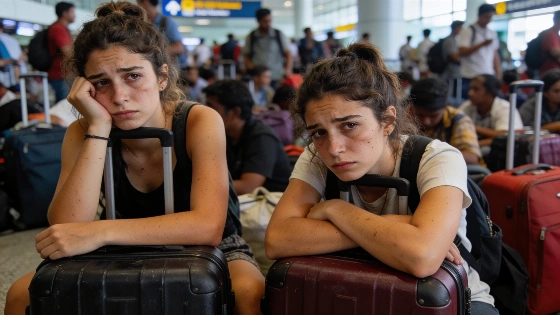
Two women from Navarra were left stranded in Jakarta after a volcanic eruption forced airport closures. With flights cancelled and no airline support, they paid extra to escape via Singapore. Their journey home stretched to four days and emptied their wallets.
A holiday return turned into a four-day ordeal for two Spanish travelers after a volcanic eruption in Indonesia led to mass flight cancellations and left them stuck in Jakarta. Marta Pina César and her friend María, both from Pamplona, were caught off guard when the Anak Krakatoa volcano forced airport closures and cut off their route home. The disruption was even wider than they realized: according to Indonesian authorities, eight airports—including Jakarta's main Soekarno-Hatta hub and several others in Greater Jakarta and Lampung—were temporarily closed because of ash from Anak Krakatau.
The trouble started suddenly. On Sunday morning, Marta and María got a message that their flight from Jakarta was cancelled due to volcanic activity—the first time this had happened since 2018. With no airline staff at the airport and no official updates, they joined hundreds of other stranded passengers searching for any way out. Every flight to Dubai, Bali, and other destinations was already full. Their only option was to buy expensive tickets to Singapore, pay for an extra hotel night, and forfeit all their pre-booked connections back to Pamplona. Reports from the government and media put the total impact at nearly 3,000 flights cancelled or delayed, affecting more than 340,000 passengers.
"In Soekarno-Hatta International Airport alone, 764 flights—including 570 domestic, 185 international, and 9 cargo—were disrupted by the ash cloud."
InJourney Airports
“It feels like we’ve been travelling for 8,000 days,” Marta told local media, describing the exhaustion and frustration. The time difference made it hard to coordinate with family back home, adding to the stress. With hours to wait in airports, Marta started filing complaints and refund requests, hoping to recover some of the unexpected costs. The Indonesian Ministry of Transport said the closures were based on BMKG assessments and aviation safety checks. Minister Dudy Purwagandhi stressed that airlines should put passenger safety first and not resume flights until given official clearance.
The journey home was still complicated. After finally getting seats to Singapore, Marta and María had to take a flight to Doha, connect to Barcelona, and then catch a train to Pamplona. By the time they arrived, nearly four days would have passed since their original departure. Meanwhile, their friend Andrea, who stayed behind in Lombok, was still stuck as flights to Jakarta kept getting cancelled, facing the same uncertainty. The most affected routes were those to and from Singapore, as well as to Doha, Sydney, and Kuala Lumpur, making it even harder for passengers to find alternatives.
For many Spanish travelers, the experience is a reminder of how unpredictable long-distance trips can be in regions prone to natural disasters. The lack of clear communication and support from airlines during crises leaves passengers to deal with the costs and stress on their own. As seen in other recent travel disruptions, the burden often falls on individuals to sort out the chaos and pay for last-minute changes.
"Most delays and cancellations affected routes through major Asian hubs, not just individual airlines. Both Singapore Airlines and Qantas reported significant disruptions, highlighting the systemic nature of the problem rather than isolated operational issues."
Reuters
Anak Krakatoa is known for sudden eruptions, with the 2018 event causing major disruption and fatalities. While authorities acted quickly to close airports for safety, there were no real backup plans for stranded tourists. For Marta and María, the experience left them exhausted and out of pocket, with little hope of quick compensation. When natural disasters hit far from home, Spanish travelers often have to manage on their own, both logistically and financially. Until airlines and regulators enforce stronger passenger protections, these kinds of ordeals will remain a risk for anyone traveling abroad.