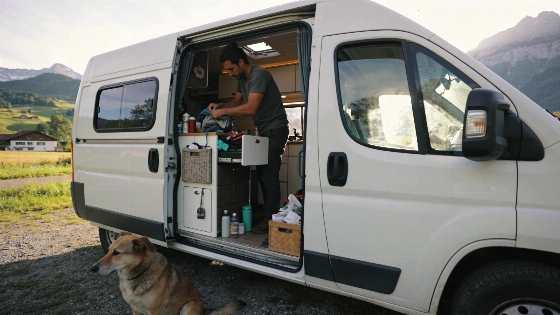
Pablo, a Spanish waiter in Switzerland, lives year-round in a compact campervan with his dog Bellota. He organizes his split shifts around her care and uses his two days off each week to travel the country, making the most of his mobile lifestyle.
Pablo starts his day before sunrise, preparing his nine-square-meter campervan for another round of split shifts at a Swiss restaurant. His first priority is Bellota, his dog, who shares the tight living space and the rhythm of his working week. Together, they set out on a morning bike ride, a routine that helps Bellota stay calm while Pablo is away at work.
Managing life in such a small space requires discipline. Every task, from making coffee to organizing work gear, takes up a significant part of the van. Pablo has adapted by keeping his routine efficient and his priorities clear: Bellota’s well-being comes first, even during the busiest days. He uses a GPS collar to monitor her location and returns to the van during breaks to check on her and handle meals.
Work and Mobility
Pablo’s job demands 42.5 hours a week, a figure that aligns closely with the Swiss hospitality sector’s collective agreement, which generally caps weekly hours at 42, with some exceptions for seasonal or small establishments. His schedule is built around split shifts, meaning he often returns to his van between work periods. This arrangement allows him to avoid traditional housing costs, but it also means constant attention to logistics—fuel, maintenance, parking, and daily supplies all require careful planning.
For those considering a similar move, Pablo’s experience highlights the importance of understanding Swiss work permits and contracts. EU citizens like him can apply for different residence permits depending on contract length, but requirements and processes vary by canton. As with other aspects of Swiss life, details matter.
Freedom on Wheels
The real payoff comes at the end of the workweek. With two consecutive days off, Pablo and Bellota hit the road, exploring Swiss villages, mountain passes, and lakesides without the need to book accommodation. He describes these trips as “48 hours of absolute freedom,” a phrase that captures the appeal of his lifestyle. The campervan transforms from a workplace base into a vehicle for discovery, allowing him to change scenery without packing or planning for hotels.
This dual use—home during the week, travel base on days off—sets Pablo’s story apart. It’s a model that offers flexibility, but not necessarily universal savings. The true cost of van life in Switzerland depends on individual habits, fixed expenses, and the realities of local prices. As noted by other Spaniards living abroad, the balance between mobility and stability is personal and often shaped by work demands.
Context and Considerations
Pablo’s approach is not unique among Europeans seeking alternatives to high rents and rigid routines. However, his story stands out for its practical focus: every decision, from daily routines to travel plans, is shaped by the needs of his dog and the constraints of his job. The Swiss context adds another layer, with strict labor rules and a high cost of living. For comparison, recent changes in Swiss public amenities, such as the reopening of Porrentruy’s outdoor pool to foreigners with higher fees, reflect the country’s careful balance between openness and regulation—a point explored in this analysis of Swiss pool access for non-residents.
While Pablo does not detail his monthly expenses, his experience suggests that the real value of van life lies in flexibility and autonomy, not guaranteed savings. For those drawn to the idea, the lesson is clear: success depends on organization, adaptability, and a willingness to accept both the freedoms and the limits of life on the move.