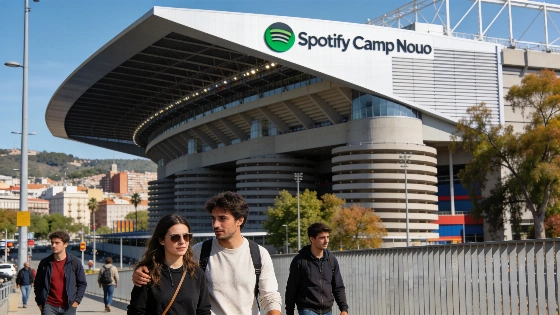
UEFA has awarded the 2029 Champions League final to Spotify Camp Nou. Barcelona’s stadium beat Wembley in a decisive vote, with the city’s infrastructure and stadium upgrades proving critical to the selection.
The UEFA Executive Committee has chosen Barcelona’s Spotify Camp Nou for the 2029 Champions League final, putting the city in the spotlight for one of football’s biggest nights. The decision, made in Thessaloniki, means London’s Wembley will not host the final that year. UEFA confirmed the choice on September 15, 2026, and the match is set for June 2, 2029. Munich was also awarded the 2028 Champions League final at the same session.
Barcelona’s bid, led by FC Barcelona and backed by local and national authorities, beat Wembley on the strength of the stadium’s size and recent renovations, along with the city’s transport and hotel network. By 2028, Spotify Camp Nou will have a new roof and a capacity of 104,600, including 9,400 VIP seats. Those upgrades and strong airport connections, including Reus and Girona, helped address UEFA’s logistical concerns, especially after problems at the 2024 Budapest final. FC Barcelona confirmed this will be the first men’s Champions League final at the renovated stadium.
Wembley, which hosted finals in 2011, 2013 and 2024, will instead focus on Euro 2028, staging four matches: the final, both semifinals and a quarterfinal. Spain will host two of the next three Champions League finals: Madrid’s Metropolitano will stage the 2027 edition. Real Madrid did not seek to host the final at the renovated Bernabéu, while FC Barcelona, under Joan Laporta, made bringing the event to Camp Nou a priority. Fox Sports and AP reported that only Camp Nou and Wembley submitted bids by the June 10, 2026 deadline.
Spotify Camp Nou has hosted major finals before, including two European Cup Winners’ Cup finals: in 1972, when crowd trouble marred Glasgow Rangers’ win over Dinamo Moscow, and in 1982, when Barcelona beat Standard Liège. The stadium was also a basic venue for the 1982 World Cup and hosted Spain’s Olympic football gold in 1992.
UEFA closely monitored the stadium’s reconstruction and required guarantees that all work would finish well before the event. The city’s ability to handle large crowds, along with the stadium’s scale and modern features, helped secure the win. As reported earlier, Spain has drawn more international sporting events in recent years, and the award strengthens Barcelona’s reputation as a host city.
The city and FC Barcelona backed the bid with investment and political support. The decision also reflects UEFA’s preference for modern venues and strong infrastructure, while respecting tradition. Barcelona’s focus now shifts to delivering a successful final on and off the pitch.