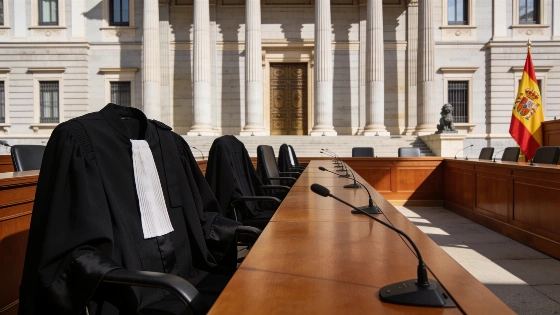
The Supreme Court is set for major changes as several top seats become vacant. Political divisions in the CGPJ have stalled appointments, with high-profile candidates and renewed battles for leadership roles.
Spain's Supreme Court is on the verge of a significant reshuffle, with several crucial vacancies in its Criminal and Administrative Chambers sparking intense political maneuvering. The General Council of the Judiciary (CGPJ) has received dozens of applications for these influential posts, but negotiations remain frozen until after the summer break, according to sources cited by EL PAÍS.
The Criminal Chamber (Sala de lo Penal) is awaiting four new magistrates, including one seat left unfilled for over three years. The Administrative Chamber (Sala de lo Contencioso-Administrativo) faces two openings, one of which is the presidency itself. These appointments are critical: the Criminal Chamber investigates and, if necessary, tries government members and top officials, while the Administrative Chamber reviews executive decisions. Every move is closely scrutinized, leading to protracted and often contentious talks within the CGPJ, which holds exclusive authority over these discretionary appointments.
Among the 42 candidates for the Criminal Chamber are prominent figures such as Enrique López, former Madrid regional minister and ex-Constitutional Court magistrate, and José Ricardo de Prada, known for his role in the Gürtel case verdict that triggered a no-confidence motion against Mariano Rajoy's government. Both currently serve as magistrates at the Audiencia Nacional. Other notable applicants include Eloy Velasco, the first judge in the Púnica case; Rosario Esteban Meilán, who presides over the section handling appeals in the Begoña Gómez case; and Samantha Romero, who led the Nóos trial.
Fifteen jurists are vying for the seat vacated by Miguel Colmenero, with Silvina Bacigalupo, a criminal law professor and former PSOE advisor, standing out. Her candidacy has become a flashpoint, with the conservative bloc of the CGPJ reportedly refusing to support her, viewing her as the preferred choice of the progressive wing and the current government. Progressives, in turn, accuse conservatives of seeking to install another right-leaning magistrate. This deadlock has led both sides to acknowledge that real negotiations will only resume once the additional three vacancies are formally opened, providing more room for compromise.
In the Administrative Chamber, 14 candidates are in the running, including Nuria Díaz Abad, a former State Attorney and member of the previous conservative CGPJ bloc. However, the main contest centers on the presidency, soon to be vacated by Pablo Lucas upon his mandatory retirement at age 72. Lucas took over after César Tolosa's appointment to the Constitutional Court and was confirmed as president last year following a tight contest between the CGPJ's progressive and conservative factions. The progressive camp, still mindful of that defeat, is determined to secure greater influence and improve female representation—currently, only 11 of 34 magistrates in the Administrative Chamber and three of 15 in the Criminal Chamber are women.
The presidency of the Administrative Chamber is now contested by Eduardo Calvo and Ángeles Huet, both with progressive leanings, and Esperanza Córdoba, representing the conservative side. The progressive bloc is expected to back Huet, while conservatives are likely to support Córdoba. Notably absent is Pilar Teso, a frequent candidate for top judicial posts, who withdrew after previous unsuccessful bids and remains a target of conservative vetoes.
With the CGPJ split evenly between progressive and conservative members, any appointment requires a cross-bloc agreement of at least 13 votes. While informal talks may occur in the coming weeks, both sides agree that substantive negotiations will only begin with the new judicial year in September, coinciding with the Supreme Court's traditional opening. Some insiders suggest that October may be the earliest realistic window for resolving these appointments, which have become one of the CGPJ's most pressing challenges at the midpoint of its mandate.
This high-stakes standoff over judicial appointments comes as Spain's legal and political landscape remains tense. For example, the unresolved status of Carles Puigdemont's arrest order continues to draw attention, with the final decision resting with the Constitutional Court rather than European judges, as detailed in recent coverage of the ongoing amnesty law debate.
Spain's Supreme Court is the nation's highest judicial authority, and its composition directly affects the oversight of government actions and the interpretation of key laws. The CGPJ, responsible for judicial appointments, has faced criticism for prolonged deadlocks and politicization. The current impasse highlights the broader struggle over judicial independence and the balance of power between Spain's political factions. As the autumn approaches, the outcome of these negotiations will shape the court's direction for years to come.