The Supreme Court has sentenced José Luis Ábalos to over 24 years for crimes linked to mask procurement during the pandemic. Koldo García and Víctor de Aldama also face prison, but Aldama may avoid jail if he meets strict conditions.
The Supreme Court has delivered a landmark verdict in the first trial of the so-called Koldo case, imposing severe sentences on former Transport Minister José Luis Ábalos and his associates for their roles in the irregular purchase of masks during the Covid-19 pandemic. Ábalos received a sentence of 24 years and three months for criminal organization, bribery, embezzlement, and influence peddling, though the court capped his actual time to be served at 16 and a half years. His former adviser, Koldo García, was sentenced to 19 years and eight months, with a maximum of 15 years to be served. Businessman Víctor de Aldama was given four and a half years, but the court ruled he could avoid prison if he refrains from reoffending, submits biannual activity reports, and completes community service.
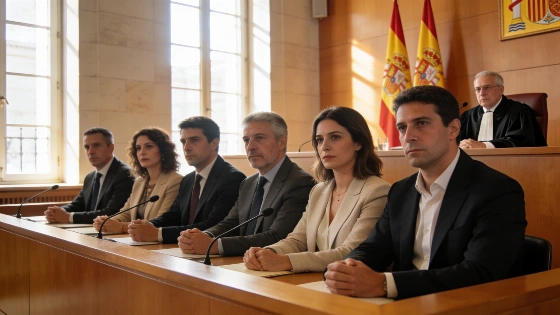
The verdict, reached unanimously by the Criminal Chamber, follows a high-profile trial that lasted 14 sessions and included testimony from more than 70 witnesses, among them public officials, civil servants, businesspeople, experts, and relatives of the accused. The court summoned the legal teams and the prosecution to its chambers at noon to formally announce the decision. Ábalos and García, both held in pre-trial detention at Soto del Real prison since November 27, appeared via videoconference, while Aldama, the only defendant not in custody, attended in person with his lawyer. Security was tight, with all participants required to leave their mobile phones outside to prevent leaks, according to sources present at the session.
The prosecution had sought 24 years for Ábalos and 19 and a half for García, arguing that together with Aldama they formed a "true criminal organization" that exploited Ábalos's ministerial position for personal gain. Defense lawyers for Ábalos and García demanded acquittal, citing a lack of evidence, while Aldama's defense, facing a reduced request of seven years due to his confession, pushed for a further reduction based on his cooperation. The Supreme Court's decision is expected to influence the remaining investigations tied to the Koldo case, which has placed significant pressure on the government and led to the political downfall of both Ábalos and his successor, Santos Cerdán.
Other strands of the investigation, including alleged rigging of public works contracts and cash payments linked to the PSOE, are ongoing at the National Court. All parties had been awaiting the Supreme Court's ruling, which now sets a precedent for future proceedings. The case has drawn comparisons to other high-profile public punishments in Spain, such as the recent events in the valley described in coverage of disciplinary actions in Valle Salvaje, highlighting the ongoing scrutiny of public officials and the consequences of corruption scandals.
For context, the Koldo case centers on contracts awarded by the Ministry of Transport during the height of the pandemic, a period marked by urgent procurement and heightened risk of irregularities. The Supreme Court's ruling not only brings closure to the first phase of this complex affair but also signals a strict judicial stance on corruption involving public health resources. The outcome may have broader implications for future oversight of emergency procurement and the accountability of senior officials in Spain.