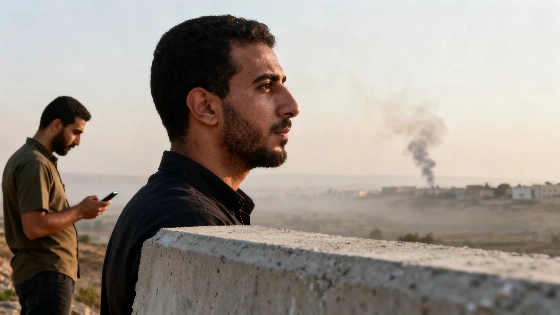
Iran Demands Cessation of Hostilities in Lebanon Amid New Attacks. Iran insists on halting the Israeli operation in Lebanon. Talks with the US are frozen, and the exchange of strikes has affected several countries in the region. The situation complicates efforts to find a diplomatic solution.
Iran has sharply increased pressure on Israel and the US, demanding an immediate halt to military actions in Lebanon. On Sunday night, Tehran moved to take active steps after a series of warnings to Washington: further dialogue is only possible if Israel ceases its operation on Lebanese territory. Amid new attacks, negotiations between Iran and the US are now at risk of collapsing, while Donald Trump has declared he is close to a “final agreement” with Tehran, despite the fact that a regional ceasefire has effectively been derailed.
In recent days, strikes between Iran, Israel, and their allies have flared up across several countries. According to media reports, civilian facilities have come under fire in Lebanon, Iran, Israel, Kuwait, and Gaza. In Iran, attacks have affected western and central regions, including the capital. Significant damage has been done to infrastructure, including energy companies and missile installations. One of the worst-hit sites was the Karoon petrochemical company in Mahshahr, which was previously targeted during past escalations. Iranian authorities have closed the airspace, and their military operation against Israel has been dubbed “Nasr” (Victory), emphasizing that further actions by Israel will be met with a harsher response.
The situation in Lebanon remains tense: despite the ceasefire reached in April, Israeli strikes and attacks by the Iran-backed Hezbollah movement continue. Tehran insists that ending the conflict in Lebanon is a key condition for resolving the entire regional war. Israel, for its part, refuses to withdraw its troops, citing security threats. For Iran, Hezbollah is not only a political partner but also an important element of regional balance, and support for this group allows it to maintain pressure on Israel and extend its influence in other countries, including Iraq and Yemen. The Lebanese government, however, does not support this position and accuses Iran of using the country as a tool in its negotiations with the United States.
Yemeni Houthis, also supported by Iran, have rejoined the conflict. They announced a blockade of Israeli ships in the Red Sea, marking their first intervention since the pause in April. Iran has warned that it is prepared to use this leverage if talks with Washington fail. An adviser to Iran's Supreme Leader stated that the choice is up to their opponents: either stop the escalation, or face new restrictions in the strategic straits of Hormuz and Bab-el-Mandeb.
Iranian President Masoud Pezeshkian emphasized that the country does not rule out either military or diplomatic approaches. However, as EL MUNDO notes, the diplomatic process has effectively stalled in recent weeks. According to experts, the current escalation is more a consequence of failed negotiations than their cause. Iran is demonstrating a readiness for asymmetric actions, including the threat to block the Strait of Hormuz, which could impact the global economy and increase instability among US allies. At the same time, analysts believe a quick peace agreement is possible only if Washington recognizes the new realities, which would mean the failure of the previous military objectives set by the Trump administration.
Amid escalating tensions in the Middle East, attention to regional conflicts is also growing in Europe. In Spain, where security and foreign policy issues have traditionally drawn interest, such developments could influence debates about the country's role in international missions and energy security. For comparison, significant changes have previously been recorded in the country’s healthcare sector, such as after 2019 in Andalusia — . This highlights how external and internal crises often influence both policy and daily life.
For reference: The Lebanese conflict remains one of the most complex flashpoints in the Middle East. Hezbollah is considered a key ally of Iran, and its armed clashes with Israel regularly lead to escalation. Yemeni Houthis, who control part of the country, are also actively involved in regional conflicts. Negotiations between Iran and the United States are traditionally complicated not only by military actions, but also by issues of sanctions, energy, and influence over neighboring states.