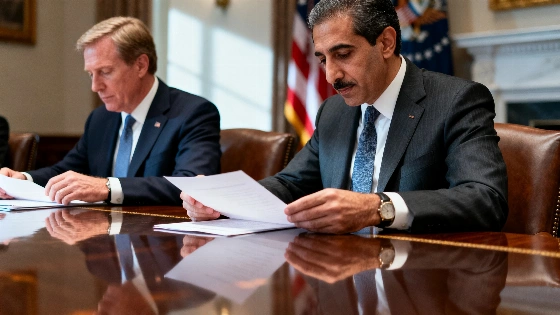
Trump Announces Nearly Finalized Agreement with Iran on Hormuz Strait. Donald Trump announced the completion of key negotiations with Iran regarding the Hormuz Strait. The decision could impact global prices and inflation in the US. An official announcement of the deal’s details is expected soon.
US President Donald Trump announced that an agreement with Iran to unblock the Strait of Hormuz is in the final stages of negotiation. He said talks are nearly complete and details will be made public soon. This move could be pivotal for global energy markets: the conflict around the strait has been provoking oil price spikes and increasing inflationary pressure in the US for several months.
Trump said he held phone talks with the leaders of Saudi Arabia, the UAE, Qatar, Pakistan, Turkey, Egypt, Jordan, Bahrain, as well as Israeli Prime Minister Benjamin Netanyahu. All discussed the terms of a future agreement with Iran. According to the US president, a preliminary understanding has been reached between the US, Iran, and several other countries, but details remain to be agreed upon.
The Iranian side confirmed that a memorandum of understanding is being discussed as the first stage of the deal, after which broader negotiations could begin within 30–60 days. However, as reported by Fars agency, Iran insists on maintaining control over the Strait of Hormuz. Tehran believes that Trump's statement about an 'almost agreed' deal does not reflect the actual state of affairs and fails to consider all disagreements.
The issue of Iran's nuclear program and the fate of its enriched uranium remain stumbling blocks. Trump demands that Tehran relinquish its stockpiles of highly enriched uranium and dismantle key nuclear facilities—Natanz, Fordow, and Isfahan. Iran, in turn, insists on postponing nuclear talks until formal cessation of hostilities. According to Reuters, Iranian negotiators express distrust toward the US and are not prepared to make concessions regarding their “legitimate rights.”
The situation around the Strait of Hormuz directly affects the European and Spanish energy markets. Since April, a fragile truce has been in place, but clashes between the US and Iran periodically occur. According to the Financial Times, the possibility of partially lifting sanctions on Iran and unfreezing the country's foreign assets is being discussed. Mediators from Qatar and Pakistan, who maintain ongoing contact with American representatives, are actively involved in the negotiations.
Previously, relations between Washington and Tehran deteriorated after the US and Israel struck Iranian nuclear facilities. Against this backdrop, Trump had already declared it impossible to accept Iran's terms, which was examined in detail in the article about the US response to Tehran's countermeasures.
According to Iranian authorities, the country's armed forces have regained some of their lost capabilities since the conflict began in February. Meanwhile, Gulf states, including Saudi Arabia, Qatar, and the UAE, are urging the US to refrain from new military operations, fearing escalation and further increases in energy prices. On Saturday, an incident involving gunfire occurred near the White House in Washington, prompting a temporary lockdown in the area, which could affect the timing of the official announcement of the deal.
The Strait of Hormuz is a key route for oil exports from the Gulf countries. Up to 20% of the world’s seaborne oil shipments pass through it. Any restrictions or security threats in this region immediately affect fuel prices and the economies of EU countries, including Spain. If negotiations are successfully concluded, energy markets may stabilize and inflationary pressures could ease; however, the final terms of the agreement remain a matter of dispute between the parties.