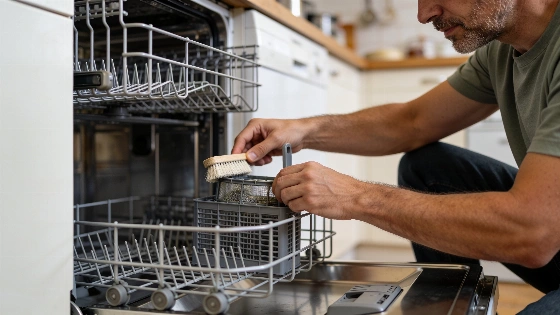
A clogged dishwasher filter is often the real reason for lingering odors and poor cleaning results. Regular maintenance takes just minutes but can prevent breakdowns and extend the life of your appliance.
At the bottom of every dishwasher sits a component most owners rarely notice: the filter. This small but essential part traps grease, food scraps, and fine particles before they reach the pump and internal pipes. When left uncleaned, it quickly becomes a breeding ground for unpleasant smells and can even cause the machine to perform poorly or break down.
The filter system typically includes a coarse filter, a fine mesh, and sometimes a microfilter, depending on the model. Its main job is to keep debris from circulating back onto your dishes or clogging the pump. If the mesh becomes coated with grease or food, water struggles to flow, leaving glasses cloudy, cutlery dirty, and sometimes water pooled at the bottom after a cycle. Over time, the pump is forced to work harder, increasing the risk of mechanical failure.
Warning Signs
The first sign your filter needs attention is a drop in cleaning performance. Dishes may come out with stuck-on particles, glasses feel rough, or a persistent odor lingers even when the machine is empty. Other red flags include standing water after a wash, strange noises during operation, or visible debris floating inside.
Manufacturers generally recommend checking the filter weekly and giving it a thorough clean at least once a month. Some brands advise inspecting it after every cycle, so always follow your model’s manual for best results.
How to Clean the Filter
Start by switching off the dishwasher and unplugging it if possible. Remove the lower rack to access the filter assembly, usually located in the center beneath the spray arm. Most filters unlock with a simple twist, but check your manual for specific instructions.
- Turn the filter mechanism according to the arrows or manufacturer’s guide.
- Lift the filter assembly out gently.
- If allowed, separate the components for easier cleaning.
- Rinse each part under warm running water.
- Use a soft brush to remove grease and food residue.
- Wipe the filter housing with a damp cloth and check for any trapped objects.
- Reassemble the filter and lock it securely in place.
- Replace the rack and run a short cycle to confirm everything is working.
Avoid using metal scourers or harsh brushes, as these can damage the mesh. Only use cleaning products approved by the manufacturer. According to official guides from Bosch and Siemens, rinsing and gentle brushing are sufficient, and abrasive cleaners should be avoided. Removing large food scraps before loading dishes also helps keep the filter cleaner for longer.
If Problems Persist
Even with a spotless filter, other issues can affect cleaning. Spray arms may be blocked by limescale or debris, or overloading the machine can prevent them from spinning. Check detergent dosage, salt levels, and ensure dishes are loaded correctly. If water remains after a cycle, the pump makes unusual noises, or the filter cannot be removed, do not force it. The problem may lie with the drain, pump, or a misaligned part. In such cases, consult your manual or contact a qualified technician.
As noted by Talent24h, keeping the filter clean is a simple step that can prevent bigger problems and expensive repairs. Some regions in Spain also offer subsidies for replacing old appliances, so it may be worth checking local programs if your dishwasher is nearing the end of its life.