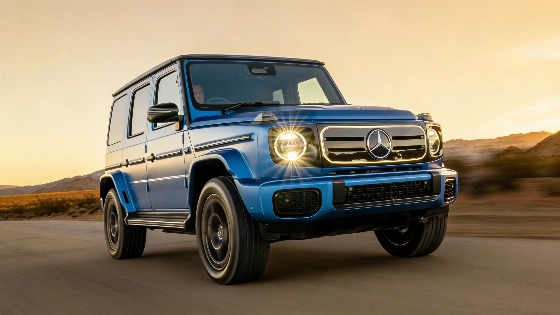
Mercedes launches Baby G: the compact SUV will get a petrol version. Mercedes has officially confirmed the launch of the Baby G, the smallest SUV in its lineup. Initially, only an electric version was planned, but at the request of dealers in the US, a petrol-powered model will also be offered. The decision comes amid weak demand for electric SUVs.
Mercedes has decided to build on the success of the iconic Geländewagen and has officially confirmed the release of the Baby G for the first time—a compact SUV that will become the most affordable model in the lineup. The prototype has already undergone testing near the Nürburgring, and the first camouflaged photos have sparked interest among the brand's fans.
Initially, the company planned to launch only an electric version of the Baby G, counting on growing interest in electric vehicles. However, the situation in key markets, especially the United States, prompted changes. After reviewing the project, American dealers insisted on retaining a gasoline-powered modification. The reason is simple: demand for electric SUVs in the US remains below expectations, while traditional engines are still in demand.
The Mercedes management did not immediately agree to the compromise. As explained by Mercedes-AMG head Michael Schiebe, the company originally did not plan to produce a gasoline version, but the arguments from dealers proved convincing. As a result, a decision was made to develop two versions in parallel—electric and gasoline-powered. This required an entirely new engineering approach: the Baby G's architecture does not match either the current G-Class or the platform of the new CLA.
According to former Mercedes technical director Markus Schäfer, the Baby G will retain its distinctive silhouette, a spare wheel on the tailgate, and an overall length of about 4.4 meters. Thus, the new model will stay as true as possible to the spirit of the original Geländewagen, but in a more compact and affordable format.
Mercedes' decision reflects a trend where even premium brands are forced to consider real customer preferences, not just global electrification trends. BMW has recently made similar strategic adjustments, abandoning hybrids in Europe — you can read more about this in the article on BMW's course change.
The Baby G is expected to hit the market within the next two years. For Mercedes, this is not only a way to strengthen its position in the compact SUV segment, but also a test of flexibility amid changing customer demands. If the project proves successful, other manufacturers may follow suit and reconsider their own electrification plans.