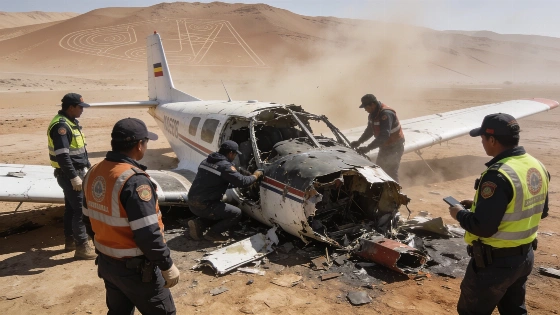
A sightseeing plane crashed near the Nazca Lines, killing all 13 on board. Victims include Spanish, Italian, German and Peruvian nationals. Authorities have launched an investigation into the cause.
Thirteen people, including two Spanish tourists, died when a sightseeing plane crashed while flying over the Nazca Lines in southern Peru. The accident, which left no survivors, occurred just two kilometers from Nazca airport, highlighting ongoing safety concerns for tourist flights in the region. Among the victims were two Peruvian crew members, seven Italians from two families, and couples from Spain and Germany, according to initial reports from Peruvian authorities.
The aircraft, a Cessna Gran Caravan C-208 operated by Aerodiana, had departed from Pisco airport around midday with the intention of offering passengers an aerial view of the world-famous geoglyphs. The crash happened at approximately 13:00 local time, shortly after the crew reported an emergency to the Nazca aerodrome control tower. Radio contact was lost immediately after the distress call, and emergency services were dispatched to the site, where they confirmed there were no survivors.
Peru's Ministry of Transport and Communications stated that the Directorate General of Civil Aeronautics (DGAC), along with aviation accident investigators, have activated protocols to determine the cause of the crash. Firefighters and police secured the area, while the Ministry coordinated with foreign consulates to inform the families of the deceased. President Keiko Fujimori expressed her condolences and confirmed that both the transport minister and foreign minister are directly involved in the response.
This tragedy comes as Peru continues to attract thousands of international visitors to the Nazca Lines, a UNESCO World Heritage site. The incident has renewed attention on the risks associated with tourist flights in the area, where weather conditions and operational challenges can complicate safety. In a related context, the importance of rapid emergency response and support for victims' families was also highlighted during the recent wildfire crisis in Castellón, where the regional government allocated significant aid to those affected, as detailed in this report on emergency assistance in La Vall d’Uixó.
Tourist flights over the Nazca Lines are a major draw for visitors, but the sector has faced scrutiny over safety standards in recent years. The Cessna Gran Caravan is widely used for such operations due to its capacity and reliability, yet accidents, though rare, have prompted calls for stricter oversight. The ongoing investigation will focus on technical, operational, and environmental factors that may have contributed to the crash. The outcome is expected to influence future regulations for aerial tourism in Peru and could have implications for travel agencies and operators working with European clients.