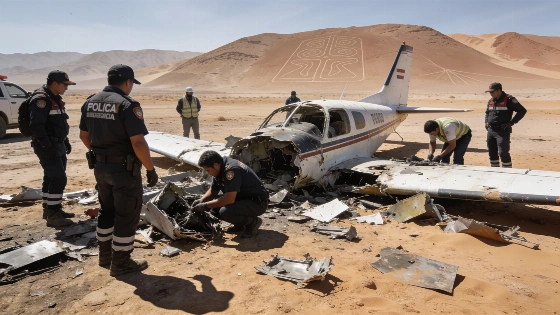
A tourist plane crashed near the Nazca Lines in southern Peru, killing all 13 on board. Among the victims are two Spaniards. Authorities are investigating the cause as rescue efforts were hampered by fire.
Thirteen people, including two Spanish tourists, died when a small plane crashed and caught fire near the Nazca Lines in southern Peru. The incident occurred as the aircraft, operated by AeroDiana, was returning from a sightseeing flight over the famous geoglyphs, a major draw for international visitors. The victims included the Peruvian pilot and guide, seven Italians from two families, and two couples from Spain and Germany, according to initial reports from Peruvian authorities.
The plane had departed from Pisco airport, about 240 kilometers south of Lima, and was nearing Nazca airport when it lost contact with air traffic control. The crash happened around 1 p.m. local time in the Pueblo Viejo area, approximately six kilometers from Nazca city and twelve from the archaeological site. The aircraft burst into flames on impact, making any rescue impossible, as confirmed by emergency services on site.
Police and firefighters quickly responded, extinguishing the fire and searching the wreckage for evidence. The area was cordoned off for several hours to allow investigators and emergency teams to work safely. The remains of the victims were transferred to the Ica region morgue, while the Aviation Accident Investigation Commission (CIAA) began collecting technical evidence to determine the cause of the crash. The identities of the tourists have not been released out of respect for their families.
Preliminary information from the Vista Alegre municipality indicated that the aircraft suffered an in-flight emergency. AeroDiana, the company operating the flight, announced plans to release a statement with further details. Their flights, lasting between 30 minutes and an hour, offer aerial views of the Nazca Lines—ancient geoglyphs over 2,000 years old, visible only from above and attracting around 100,000 visitors annually.
Weather conditions may have played a role, as a sandstorm the previous day forced the suspension of tourist flights in the area. Strong winds reduced visibility, causing other planes to divert to Marcona airport instead of the usual María Reiche airstrip. Flights resumed the day of the accident, but the cause remains under investigation.
This is not the first fatal crash in the region. In 2022, a similar accident claimed seven lives, including two Chileans and three Dutch tourists. Another crash in 2010 killed four British tourists and two Peruvian crew members after a flight over the archaeological site. The Nazca Lines remain a high-profile but challenging destination for aerial tourism, with safety concerns periodically resurfacing.
Emergency responses to disasters in tourist areas have become a recurring issue in the region. For example, when a large sinkhole forced the evacuation of several buildings in Barcelona, authorities acted swiftly to secure the area and protect residents, as detailed in this related report.
The Nazca Lines, recognized as a UNESCO World Heritage Site, are among Peru's most iconic attractions. The geoglyphs, created by the Nazca culture, depict animals, plants, and geometric shapes across the desert. Despite their popularity, the risks associated with sightseeing flights highlight ongoing challenges for tourism safety in the region.