Spain faces another day of severe downpours as unstable Mediterranean conditions fuel unpredictable storms. Flooding risks remain high, with emergency alerts in place for multiple regions and rainfall totals already breaking records in some areas.
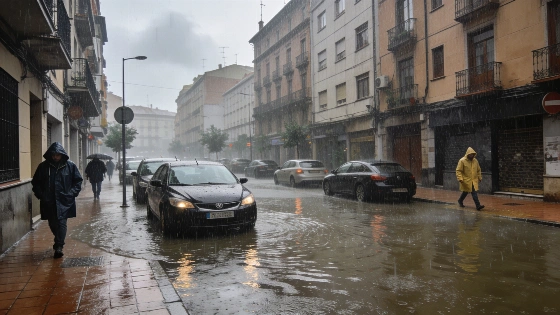
Emergency crews in Spain are back on alert. Heavy rain is sweeping across the country again. Floodwaters are rising fast. Residents brace for more trouble as the afternoon promises another round of violent storms. Flash floods threaten both inland towns and the coast.
Yesterday, the numbers told the story. In Vallès Oriental, Granollers logged 107 l/m². That pushed the weekend total close to 350 l/m². This is rare for early summer. Barcelona’s Vallcarca neighborhood saw 106 l/m². Badalona and the Fabra Observatory each topped 75 l/m². These aren’t just numbers. Streets flooded. Rivers swelled. Homes and businesses took damage. The ground is soaked. Every new downpour now brings a bigger risk. AEMET and Meteocat data show rainfall in some places has smashed seasonal records. Emergency services have confirmed at least two deaths and one missing person in Catalonia from the extreme weather.
In Vilassar de Mar, rainfall reached 288 l/m² by 10:00, making it one of the hardest-hit coastal towns during the episode.
Today, the pattern shifts. Storms are set to hit the Ebro and Ponent regions first. Then they’ll move east, reaching the Mediterranean coast. Meteocat warns of a volatile afternoon. Rainfall could top 40 l/m² in just thirty minutes. The Pyrenees, Pre-Pyrenees, and southern areas are at risk. Coastal zones won’t escape. Downpours may keep coming into the night. Granollers stands out. Rainfall there hit 248 l/m², with 68 l/m² falling in only half an hour. That’s more than double earlier reports. Meteocat confirms the storms are getting stronger.
Why is this happening? The Mediterranean is warmer than usual. That heat fuels unstable weather. The result: storms that look almost tropical. Heat and humidity are driving mesoscale convective systems. These are clusters of intense storms that can form suddenly and dump huge amounts of rain. On Monday, forecast models missed a major coastal event. Still, a new system formed, though it was less severe than the weekend’s deluge. Catalonia’s Civil Protection Service reported that Es-Alert messages went out to residents in five comarcas. People were told to stay home if possible. Barcelona and its metro area got special warnings to avoid travel because of flash flood risk.
The outlook isn’t good. More showers and storms are coming Wednesday, especially in the north. On Thursday, the northeast will be in the spotlight. The Valencian Community—especially inland—and the Balearic Islands are also at risk for heavy, irregular rain. Temperatures will stay between 21°C and 26°C. The northeast might get a bit warmer, but the worst heat is holding off for now.
The Besòs River reached a dangerous flow rate of 936 m³/s near Santa Coloma de Gramenet, far surpassing the 500 m³/s recorded during Storm Gloria. Authorities warned of possible overflows of both the Besòs and Ter rivers, and the Tenes tributary saw its flow jump from 1 to 128 m³/s in just one hour, sharply increasing flood risks in the lower basin.
Forecasting is tough. Conditions change fast. Updates are constant. Relief may come at the end of the week. Cooler, calmer weather is possible. Until then, emergency crews and residents have to stay alert. The ground is saturated. Storms are unpredictable. There’s little room for mistakes. This episode shows how wild Mediterranean weather can get. Local responses need to adapt as climate extremes become more common. AEMET notes that rainfall has been both intense and long-lasting. Some places have seen over 40 l/m² in 30 minutes, 90 l/m² in three hours, and more than 200 l/m² in 24 hours.