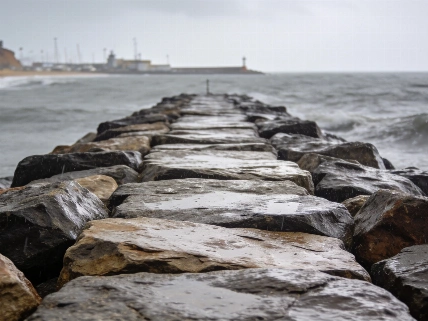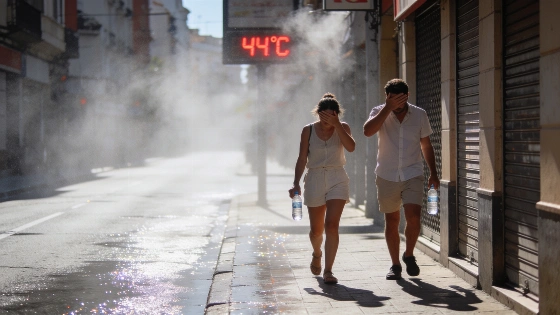
Spain’s weather has flipped overnight as twelve regions activate rain and storm alerts. Catalonia faces the highest risk, with forecasts of over 100 litres per square metre in just hours. Authorities warn of possible flooding and severe disruption.
Heat vanished fast. By Monday, September 28, 2026, Spain’s weather map was covered in warnings. Twelve autonomous communities switched on rain and storm alerts. Catalonia moved to orange alert. The State Meteorological Agency (Aemet) warned that more than 100 litres per square metre could fall in just a few hours. That’s enough to flood streets and shut down daily life. EFE reported this is one of the broadest weather alerts in recent years.
Catalonia faces the worst of it. The orange alert starts at 21:00 and runs through the night. In the Prepirineo, Barcelona’s coast and pre-coastal areas, and the central depression, rain could hit 40 litres per square metre in just one hour. Tarragona’s northern and southern coasts are also on edge. Aemet says 100 litres could fall in two to three hours. That would swamp drains and push emergency crews to their limits. Local and national bulletins confirm the storms will move into Girona and Lleida on September 29. Alert times will shift depending on the area.
In some Catalan regions, official forecasts indicate rainfall totals of 60–100 litres per square metre for the entire episode, raising the risk of sudden flash floods.
Yellow alerts stretch across much of Spain. In Lleida, storms could bring hail and wind gusts up to 90 km/h. Aragón faces similar threats in Albarracín, Jiloca, Gúdar, Maestrazgo, and the western Ebro valley. Up to 20 litres per square metre could fall in an hour. Hailstones under two centimeters and strong winds are likely. The Pyrenees, Huesca, and the Cinco Villas of Zaragoza brace for 40 litres over twelve hours. Aemet says yellow alerts are less severe than orange but still demand caution. Local flooding and dangerous roads are possible.
Andalusia’s Grazalema, the Strait of Cádiz, and parts of Málaga and Huelva are under yellow warnings for 15 litres per square metre in an hour. Hail is a risk. Extremadura’s Badajoz and Cáceres provinces face similar rainfall rates. Strong gusts and hail could hit the north and center. EFE notes that, besides Catalonia, Aragón, Andalusia, Extremadura, and Castilla y León are also at risk. Hail and strong winds are part of the threat.
Castilla y León’s south and center, Salamanca, Zamora, the Cantabrian mountains, and northern Burgos are all flagged. They could see 15 litres in an hour, hail, and strong winds. The north won’t escape. Asturias, Cantabria, Galicia, Navarra, and the Basque Country are all under yellow warnings for heavy rain and storms. Hail is likely there too.
The orange alert in Catalonia is scheduled to begin at 21:00, initially affecting Barcelona and Tarragona, before expanding to Girona and Lleida on Tuesday. In some areas, warnings will remain active until 11:00, 15:00, or 18:00, depending on local conditions.
Valencia’s southern Castellón and both the northern and southern interiors of Valencia province are bracing for 20 litres per square metre in an hour. Castilla-La Mancha’s Serranía de Cuenca could see 40 litres in twelve hours. Even Ceuta, on the African coast, is under yellow alert for 15 litres in an hour and thunderstorms.
These warnings are serious. An orange alert means real danger to normal life. Yellow alerts are less severe but still threaten certain sectors. They require people to stay alert. Most warnings start in the afternoon or evening. In parts of Andalusia, alerts began at 07:00.
Spain’s weather has been wild lately. Heat one day, storms the next. As reported earlier by russpain.com, the north already saw sudden temperature drops and unstable skies. That set the stage for this escalation.
Now, with so many regions on alert and Catalonia at highest risk, the next hours will test local systems and emergency plans. The sudden switch from summer heat to violent storms shows how extreme Spain’s climate can be. For residents and officials, the focus is clear: stay alert and act fast if flooding or severe weather hits. The speed and scale of this change show why strong preparation matters. Spain’s weather is only getting more unpredictable.