Spain will witness a total solar eclipse on August 12, the first since 1912. Only select northern areas will see full darkness. Authorities urge careful planning and strict eye protection.
On August 12, Spain will experience a total solar eclipse, a rare astronomical event not seen in the country since 1912. While the entire peninsula will notice the phenomenon, only certain northern regions will witness the Sun completely obscured by the Moon. This fleeting moment of daytime darkness is expected to draw thousands to the so-called 'path of totality,' which includes Galicia, Asturias, Cantabria, La Rioja, and large parts of northern Castilla y León, as well as areas in Madrid, Aragón, Castilla-La Mancha, the Comunidad Valenciana, Cataluña, and the Balearic Islands.
The Instituto Geográfico Nacional (IGN) has launched an interactive tool allowing residents and visitors to check precisely which municipalities will experience the full eclipse, along with the exact times for the start, peak, and end of the event. This resource is designed to help people select the best observation points and plan their journeys, as significant crowds are expected to converge on the regions with the best viewing conditions.
Experts strongly advise early planning, both for travel and for choosing observation sites with a clear western horizon. Weather forecasts should be monitored closely, as cloud cover could obscure the spectacle. After the eclipse, authorities recommend delaying return trips to avoid heavy traffic, a lesson reinforced by recent local experiences with large-scale public events. For example, concerns over crowd management and safety led several Madrid municipalities to cancel eclipse gatherings, as reported in recent coverage of event cancellations due to wildfire risk.
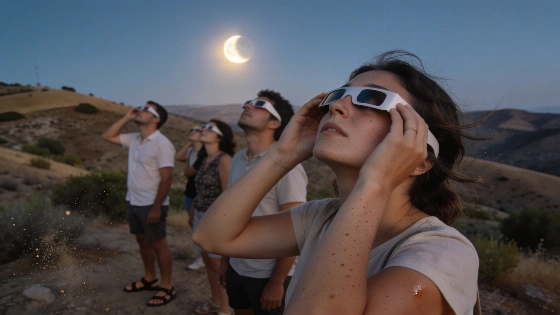
Safety remains a top priority. Specialists warn that looking directly at the Sun without certified protection can cause irreversible eye damage. Only during the brief phase of totality is it safe to view the eclipse with the naked eye. Approved eclipse glasses must carry the CE mark and comply with ISO 12312-2:2015 standards. Regular sunglasses, homemade filters, or improvised materials like smoked glass or X-rays do not provide adequate protection. The same caution applies to telescopes, binoculars, and cameras, which require solar filters fitted in front of the lens.
This year's eclipse coincides with the peak of the Perseid meteor shower, making August 12 a unique date for astronomy enthusiasts. The combination of these two celestial events is expected to boost interest and travel to the best viewing locations. As Spain prepares for this extraordinary day, authorities and experts emphasize the importance of responsible observation and adherence to safety guidelines to ensure the event is memorable for all the right reasons.
For context, total solar eclipses are rare in Europe, with the last visible from Spain occurring over a century ago. The path of totality is typically only a few hundred kilometers wide, and weather conditions can make or break the experience. The IGN's interactive map is a valuable tool for maximizing the chance of witnessing the full eclipse. The event also highlights the need for public awareness about eye safety, as improper viewing methods have led to injuries in past eclipses worldwide. With the added draw of the Perseids, August 12 is set to become a landmark date for Spain's astronomical calendar in 2026.