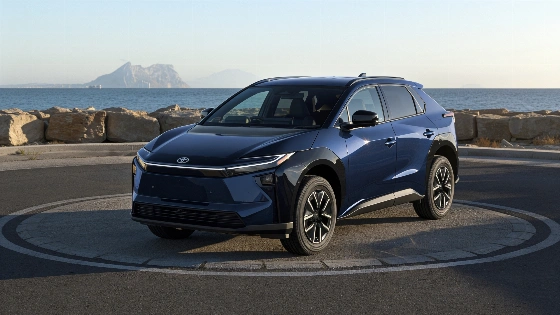
Toyota is set to launch its first electric car with solid-state batteries by 2028, aiming to outpace Chinese rivals. This technology promises faster charging, longer range, and greater safety for the future of electric vehicles.
Toyota has moved to the front of the global race to commercialize solid-state batteries, setting its sights on delivering the first mass-market electric car equipped with this technology before 2028. While many automakers are investing heavily in next-generation batteries, Toyota’s progress stands out for both its scale and ambition.
Solid-state batteries are widely seen as the next major leap for electric vehicles. Unlike conventional lithium-ion batteries, which use a liquid electrolyte, solid-state designs replace this with a solid material. This shift brings several key advantages: higher energy density, faster charging, improved safety, and longer lifespan. For drivers, this could mean electric cars that travel further on a single charge and spend far less time plugged in.
One of the most significant benefits is the potential to dramatically increase driving range without making batteries larger or heavier. Toyota claims its upcoming models could reach up to 1,000 kilometers per charge, and the company is already working on a second generation that could push this figure to 1,500 kilometers. Charging times are also set to shrink, with targets of going from 10% to 80% in just 10 minutes—approaching the convenience of refueling a petrol car.
Safety is another critical factor. By eliminating the flammable liquid electrolyte, solid-state batteries reduce the risk of thermal runaway and fires, a concern that has shadowed lithium-ion technology. The solid materials also degrade more slowly, promising a longer useful life and less capacity loss over time.
Toyota’s lead is built on more than a decade of research and development. Since 2012, the company has accumulated over 1,000 patents related to solid-state batteries—more than any other automaker. Much of this innovation was initially driven by Toyota’s focus on hybrid technology, but the breakthroughs are now being redirected toward full electric vehicles. In 2023, Toyota announced it was moving from experimental phases to preparing for industrial-scale production, a crucial step toward bringing these batteries to market.
With support from Japan’s Ministry of Economy, Trade and Industry, Toyota is now in the final stages of development. The company aims to begin selling electric cars with solid-state batteries between 2027 and 2028, putting it in direct competition with leading Chinese manufacturers who are also racing to commercialize the technology. According to RUSSPAIN, the competition is intensifying as Chinese brands like XPeng push the boundaries of charging speed and range, as seen in their latest electric SUV launches.
Industry analysts note that while technical hurdles remain—particularly around manufacturing costs and large-scale reliability—Toyota’s progress signals a turning point. If the company meets its targets, the arrival of solid-state batteries could reshape the electric vehicle landscape, offering consumers a compelling alternative to both traditional combustion engines and today’s lithium-ion EVs.
For context, solid-state battery development is not limited to Japan and China. Automakers in Europe and the US are also investing in the technology, but Toyota’s patent portfolio and production timeline put it among the frontrunners. The next two years will be critical as the industry watches whether Toyota can deliver on its promise and set a new standard for electric mobility.