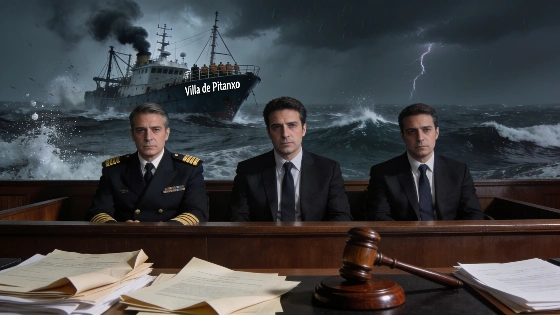
The National Court will try the captain and two owners of the ‘Villa de Pitanxo’ after 21 crew died off Newfoundland. Prosecutors seek nine years in prison and €44 million in compensation. The case highlights major safety failures.
The National Court has formally initiated criminal proceedings against the captain and two senior executives of the Galician fishing vessel ‘Villa de Pitanxo’, following the deaths of 21 out of 23 crew members in the 2022 sinking near Newfoundland. Prosecutors are seeking nine-year prison terms for all three, along with a combined €44 million in compensation for the victims’ families. The case stands out as one of the deadliest maritime tragedies in recent Spanish fishing history, with the court demanding the accused post a substantial bond to cover potential civil liabilities.
Judge Ismael Moreno has ordered Juan Enrique Padín, the vessel’s captain, as well as José Antonio Nores Ortega and José Antonio Nores Rodríguez, administrators of Pesquerías Nores Marín, to stand trial. The charges include 21 counts of gross negligent homicide, reckless injury, violations of workers’ safety rights, and document falsification. The court also holds Pesquerías Nores Marín civilly liable, and names British Marine Luxembourg as the direct insurer responsible for any damages awarded.
According to the indictment, the accused allowed the ‘Villa de Pitanxo’ to operate under unsafe conditions, disregarding essential safety protocols and exposing the crew to significant risk. Investigators found the vessel was overloaded, partly due to unauthorized fuel tanks that were not included in the ship’s original design. This modification brought the waste hopper dangerously close to the waterline, increasing the likelihood of water ingress and compromising the vessel’s stability.
The fatal incident unfolded in the early hours of February 15, 2022, when the main engine lost power after a severe list of over 35%. Emergency generators were activated, but the captain was forced to issue a distress call and order the crew to abandon ship. Most crew members attempted to reach the lifeboats, but only three survived after being rescued from a liferaft. Four others in the raft had already died, and five more bodies were later recovered from the sea. Autopsies revealed that seven of the victims had contracted COVID-19 at the time of the sinking.
The prosecution argues that both the captain and the owners authorized modifications to increase fuel capacity, knowingly exceeding the vessel’s permitted draft. These changes, combined with a lack of proper safety measures, directly contributed to the disaster. The indictment details how the crew’s attempts to escape were hampered by the rapid flooding and confusion on board. The last AIS signal was sent at 4:23 a.m., with the vessel sinking completely within minutes of the abandonment order.
The families of the deceased, represented by private prosecutors, have indicated they will seek even harsher penalties, though many have expressed satisfaction with the court’s decision to proceed to trial. Only nine bodies were recovered, leaving many families without closure. The final pre-trial hearing is scheduled for July 28, when the accused and company representatives will receive the formal indictment and may submit their defense statements.
This high-profile case has drawn attention to persistent safety issues in Spain’s fishing sector, echoing concerns raised in other recent legal battles involving public officials and accountability, such as the ongoing scrutiny of law enforcement leadership described in recent reports on judicial investigations. The outcome of the ‘Villa de Pitanxo’ trial is expected to set a precedent for future maritime safety enforcement and corporate responsibility in the industry.
Spain’s fishing fleet is among the largest in Europe, with Galicia serving as a major hub for deep-sea operations. The ‘Villa de Pitanxo’ tragedy has intensified calls for stricter oversight of vessel modifications and crew safety standards. Maritime authorities have since reviewed protocols for ship stability and emergency preparedness, aiming to prevent similar disasters. The case also highlights the complex legal landscape surrounding civil and criminal liability in maritime accidents, especially when multiple parties and international insurers are involved. As the trial proceeds, industry observers and affected families alike await further developments that could reshape safety practices across the sector.