Spanish police rescued a Romanian truck driver held hostage for over a week after half a ton of cocaine vanished. The operation targeted an Albanian trafficking group. The missing drugs remain unrecovered.
A dramatic police operation in Catalonia has ended the week-long captivity of a Romanian truck driver, who was abducted after a shipment of over 500 kilograms of cocaine disappeared en route through Spain. The National Police intervened on August 10, freeing the 47-year-old man as he was being transported to a remote area near Barcelona, where investigators believe he faced imminent execution.
The case began to unfold when a short, threatening video circulated among Romanian truckers across Europe. In the footage, a man is seen holding a pistol to the victim’s head, demanding the return of the missing cocaine. The video, which could only be viewed once before deletion, quickly raised alarms. One recipient alerted Romanian authorities, who traced the message to a Spanish mobile number registered to a Romanian national living in Spain.
According to police sources, the logistics chain for the drug shipment was complex. An Albanian trafficking clan had contracted a Romanian intermediary to move the cocaine from Portugal to an undisclosed European destination. The intermediary then passed the job to the eventual victim, who subcontracted it further. The final transporter claimed he was robbed by another criminal group and vanished, leaving the original cargo owners demanding answers.
As tensions escalated, the intermediary was pressured by the Albanian clan and, in turn, targeted the first truck driver, who was then kidnapped. The captors sought information on the whereabouts of both the missing driver and the lost cocaine. The situation became urgent when, on August 7, Romanian police requested assistance from Spanish authorities, convinced the abduction had occurred in Spain.
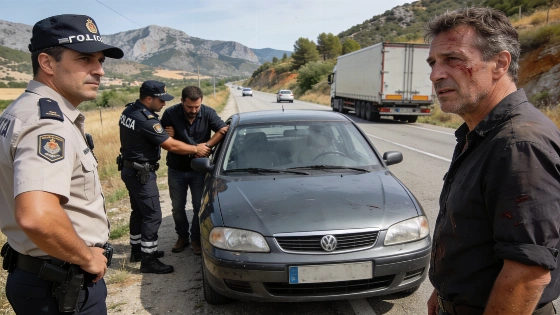
Spanish police launched Operation Umbra, focusing on a warehouse in Sabadell used by the trafficking network. Surveillance and a raid failed to locate the hostage, but officers anticipated the kidnappers would attempt to move him. Three days later, police tracked a vehicle carrying the victim and a suspected captor toward a secluded mountainous area near Caldes de Montbui. On a quiet road, officers intercepted the car. The suspect resisted, first trying to ram police vehicles, then reaching for a Tokarev pistol concealed in a waist bag before being subdued and arrested.
After his release, the victim told police his captor had promised to let him go, claiming he too feared retaliation from the Albanian clan. The suspect was charged with kidnapping and illegal possession of a firearm but was released on provisional liberty. The whereabouts of the missing cocaine and other individuals involved remain unknown.
This incident highlights the risks faced by transport workers caught in the crossfire of international drug trafficking. The use of encrypted messaging and single-view videos complicates investigations, while the involvement of multiple nationalities reflects the cross-border nature of such criminal networks. For context, Spanish authorities have recently focused on improving public safety and healthcare, as seen when Hospital Universitario de Guadalajara adopted advanced allergy diagnostics to reduce patient risk, detailed in this recent report on medical innovation in Spain.
Spain remains a key transit point for narcotics entering Europe, with Catalonia frequently cited in law enforcement operations against organized crime. The ongoing search for the missing half-ton of cocaine underscores the scale and persistence of trafficking challenges facing Spanish and European authorities.