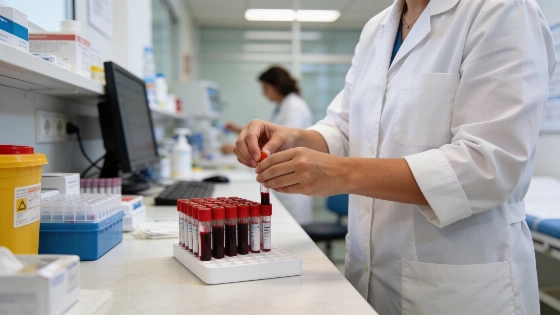
Hospital Universitario de Guadalajara is among the few in Spain using the Basophil Activation Test to diagnose severe allergies. The method reduces the need for high-risk exposure tests and marks a shift in patient safety and care.
Hospital Universitario de Guadalajara has become one of the select Spanish hospitals to routinely use the Basophil Activation Test (BAT) for diagnosing severe allergic reactions. This blood-based diagnostic tool allows doctors to identify allergies to medications and hymenoptera venoms without exposing patients to the potential dangers of controlled provocation tests. Since its introduction, 59 patients with suspected drug or venom allergies have been evaluated using this method, with samples processed in less than 24 hours at the hospital's day unit.
The adoption of BAT is part of a broader transformation at the hospital’s Allergology Day Unit, following a major expansion and renovation completed in June 2025. The new facilities have enabled a significant increase in high-risk diagnostic procedures, with controlled drug exposure tests rising by 18% and food allergy tests up by nearly 17%. The hospital has also improved patient safety by introducing separate risk circuits and specialized beds for managing severe reactions, as well as dedicated spaces for immunotherapy and biological treatments.
Since the upgrade, the Allergology Day Unit has carried out 4,645 medical procedures, not counting outpatient consultations. These include 761 high-risk drug allergy tests, 285 food allergy tests, 148 oral immunotherapy procedures, and 103 drug desensitizations. Additionally, 290 doses of biological treatments have been administered, mainly to patients with chronic urticaria and severe asthma. The unit has also delivered 1,645 doses of immunotherapy for airborne allergens and 1,213 for hymenoptera venoms, alongside 168 hospital consultations, most related to adverse drug reactions.
The hospital’s commitment to innovation and patient safety was recognized in November 2025, when its Immunotherapy Unit received the Excellence accreditation from the Sociedad Española de Alergología e Inmunología Clínica (SEAIC). This distinction certifies compliance with high standards in patient safety, procedure quality, protocol updates, ongoing staff training, treatment monitoring, and response to adverse reactions. According to the hospital’s management, this recognition guarantees quality and safety for patients undergoing these advanced treatments.
Hospital Universitario de Guadalajara’s approach reflects a wider trend in Spanish healthcare, where new diagnostic technologies are being integrated into routine practice to improve outcomes and reduce risks. The use of BAT for direct patient care, rather than solely for research, sets the hospital apart nationally. This shift is part of a broader movement in Spain to modernize medical infrastructure and adopt safer, more effective diagnostic tools. In a related development, regional authorities elsewhere have also been reviewing healthcare strategies, such as the consideration of tolls on the AP-7 motorway to address congestion and safety, as reported in recent regional transport policy discussions.
For context, the Basophil Activation Test is a laboratory technique that measures the activation of basophils, a type of white blood cell, in response to specific allergens. Its use can help avoid the risks associated with traditional provocation tests, which require patients to be re-exposed to substances that previously triggered severe reactions. The hospital’s experience demonstrates how targeted investment in infrastructure and diagnostics can directly impact patient safety and care quality. As more Spanish hospitals consider similar upgrades, the Guadalajara model may serve as a reference for integrating advanced allergy diagnostics into everyday clinical practice.