Donald Trump has declared the US-Iran ceasefire finished after a night of military strikes. The US targeted over 80 Iranian sites following attacks on oil tankers. Iran responded by hitting US military locations in Bahrain and Kuwait.
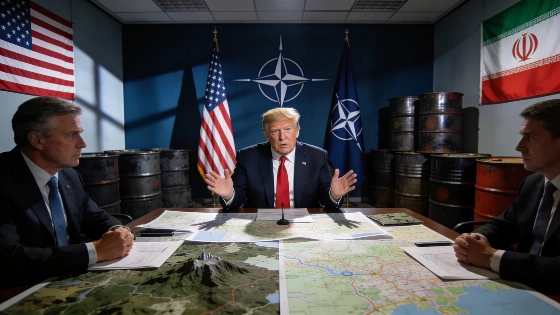
The fragile ceasefire between the United States and Iran has collapsed after a series of overnight military strikes, with US President Donald Trump announcing an end to the truce. The escalation follows coordinated attacks on oil tankers in the Strait of Hormuz and retaliatory strikes on military sites in the Gulf region. Trump, speaking at a Nato summit in Ankara, described the Iranian leadership in harsh terms and made clear that, from the US perspective, negotiations are now futile.
According to statements from the US administration, American forces targeted more than 80 sites in Iran late Tuesday. This action came after three commercial vessels—a Qatar-owned LNG tanker, a Saudi crude oil tanker, and a Liberia-flagged ship—were attacked while transiting the Strait of Hormuz. While Iran has not officially claimed responsibility for the tanker incidents, the US response was immediate and extensive. The UK Maritime Trade Operations confirmed the attacks but did not release the names of the vessels involved. No casualties or environmental damage have been reported so far.
In response, Iranian officials announced strikes on US military installations in Bahrain and Kuwait. Iran's Foreign Minister Abbas Araghchi accused the US of violating the recently signed memorandum of understanding, which had aimed to extend the ceasefire and reduce hostilities. He stated that renewed US sanctions and ongoing regional conflicts have undermined key elements of the agreement. Iran warned it would defend its sovereignty and respond to any further attacks.
Nato Secretary General Mark Rutte defended the US actions, calling them necessary in light of what he described as Iran's breach of the ceasefire. Meanwhile, Iran's parliamentary speaker Mohammad Bagher Ghalibaf insisted that it was the US that broke the truce. The situation remains tense, with both sides trading accusations and military blows.
Footage from the Iranian port city of Bandar Abbas showed multiple explosions and fires overnight, though the specific targets of the US strikes remain unclear. The renewed conflict has already impacted global markets, with oil prices rising sharply following Trump's announcement that the ceasefire is over.
This marks the most serious confrontation between the US and Iran since the two countries signed a 14-page memorandum of understanding on 17 June, intended to halt fighting on all fronts. Despite the escalation, neither side has indicated a desire for full-scale war, but the risk of further incidents remains high.
The Strait of Hormuz is a critical chokepoint for global oil shipments, with a significant portion of the world's petroleum passing through its waters. Disruptions in this region can have immediate effects on energy prices and supply chains worldwide. The latest developments highlight the ongoing volatility in the Gulf and the challenges of maintaining stability amid deep-seated political and military rivalries.